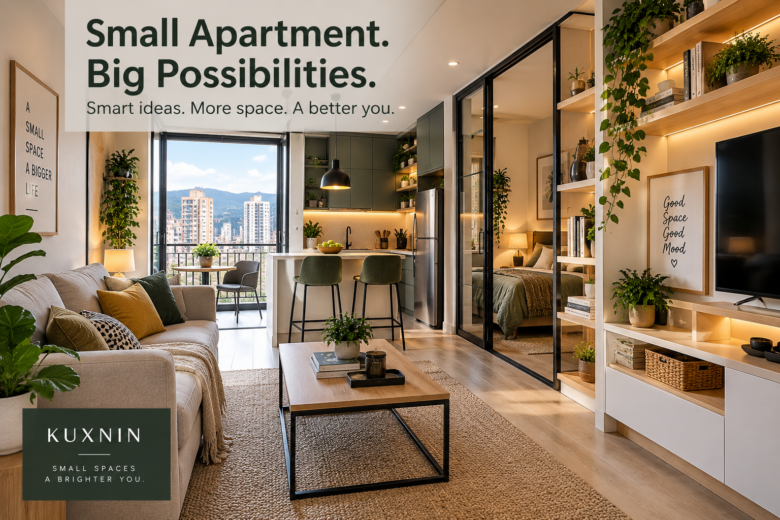
How to Make a Small Apartment Feel Bigger Without Remodeling
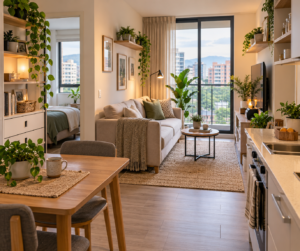
Living in a small apartment does not mean you have to feel surrounded by walls, furniture, and clutter. In many cases, the apartment itself is not the real problem. The way furniture, light, storage, and everyday objects are arranged can dramatically change how spacious a home feels.
Disclaimer: This post contains affiliate links. As an Amazon Associate, I earn from qualifying purchases at no additional cost to you.
The good news is that creating a more open and comfortable apartment does not require knocking down walls or spending thousands of dollars on renovations. Small changes in layout, lighting, furniture selection, and visual organization can make a noticeable difference.
A room can feel larger when the eye has clear paths to travel through the space. Natural light can make walls appear farther apart. Furniture with the right proportions can free up valuable floor area, while hidden storage can reduce the visual clutter that often makes small apartments feel even smaller.
“A great space saver is a set of nesting coffee tables, which allows you to tuck the smaller table away when not in use.”
The goal is not to make a small apartment pretend to be a large one. It is to make every part of the available space work better.
If your home has a long or narrow layout, see how to transform a long, narrow small space into a functional and beautiful home.
In this guide, we will explore practical ways to make a small apartment feel bigger, brighter, and more comfortable without remodeling. These ideas can work in living rooms, bedrooms, kitchens, entryways, and even studio apartments where several functions need to share the same room.
Start With the Space You Already Have
Before buying new furniture or storage products, take a careful look at what is already occupying your apartment.
Small spaces often become crowded gradually. An extra chair stays in the corner, boxes accumulate beside a cabinet, decorative objects cover every available surface, and furniture that once seemed useful begins to interrupt the natural flow of the room.
Removing or relocating only a few unnecessary objects can immediately reveal space that was already there.
Walk through the apartment as if you were seeing it for the first time. Look for narrow passages, furniture blocking windows, unused corners, oversized pieces, and objects that do not have a permanent place.
A more spacious home often begins not by adding something new, but by deciding what no longer needs to occupy valuable space.
Rethink the Furniture Layout Before Buying Anything
Furniture placement has a major influence on how large or small an apartment feels. Even a beautiful room can feel cramped when large pieces interrupt walkways or cover too much visible floor space.
Start by identifying the main path people use to move through each room. Ideally, you should be able to walk from one area to another without constantly moving around chairs, tables, or storage units.
Instead of automatically pushing every piece of furniture against a wall, experiment with the layout. In some rooms, leaving a small amount of space behind a sofa or repositioning a table can actually create a cleaner visual structure.
Keep Windows as Open as Possible
Natural light is one of the most powerful tools available in a small apartment, and it costs nothing.
Avoid placing tall cabinets, bulky shelving units, or large decorative objects directly in front of windows. The more daylight that enters the room, the more open the space can feel.
Light curtains or simple window treatments can also help distribute daylight throughout the room without sacrificing privacy.
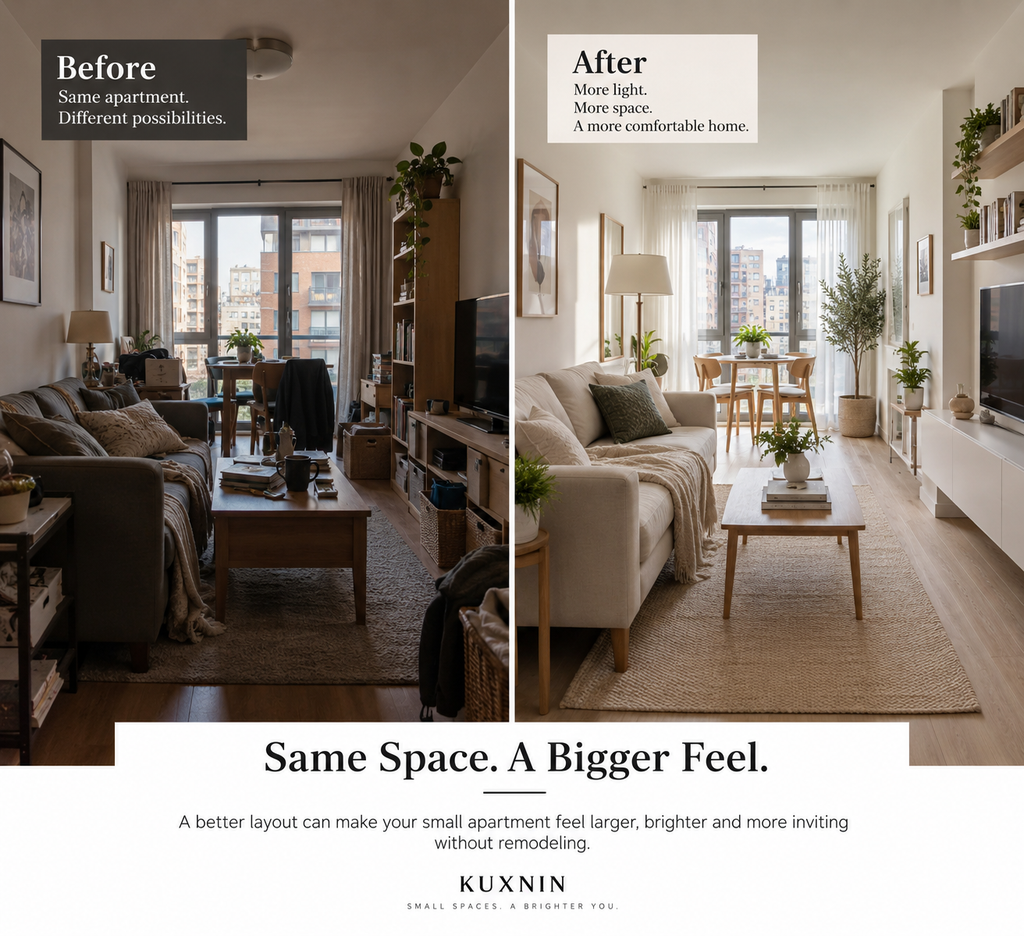
Choose Furniture That Matches the Scale of the Room
A common mistake in small apartments is using furniture designed for much larger spaces.
An oversized sectional sofa, deep armchairs, or a large dining table can dominate a room and leave very little visible floor area. This does not mean every piece of furniture needs to be tiny. Instead, look for proportions that make sense for the available space.
Furniture with exposed legs can be especially useful because being able to see some of the floor underneath creates a greater sense of visual continuity.
Multipurpose pieces can also reduce the number of items needed in the room. A storage ottoman can provide seating, hidden storage, and a place to rest your feet. A compact dining table can double as a workspace, while a bench with storage underneath can replace several separate pieces.
The best furniture for a small apartment is not simply smaller furniture. It is furniture that earns the space it occupies.
Use Light to Visually Expand the Apartment
Light changes the way we perceive space. A poorly lit room can feel smaller and heavier, while a bright room often feels more open even when its actual dimensions have not changed.
Natural light should always be the starting point. Keep the area around windows relatively clear and avoid heavy curtains that absorb too much daylight. When privacy is necessary, lightweight curtains can soften the light without making the room feel closed.
Artificial lighting matters too. Instead of relying on a single ceiling fixture, combine different sources of light. A floor lamp beside the sofa, a small table lamp, or lighting beneath kitchen cabinets can brighten darker areas and reduce heavy shadows.
The idea is to spread light throughout the apartment rather than concentrating it in one place.
Use Mirrors Strategically
Mirrors can be extremely effective in small apartments when they are positioned intentionally.
A large mirror placed near or across from a window can reflect natural light deeper into the room. It can also reflect an open part of the apartment, creating the impression that the space continues beyond the wall.
However, more mirrors are not necessarily better. One well-positioned mirror usually creates a cleaner result than several small mirrors competing for attention.
Create a Lighter Visual Palette
Light and neutral colors can help create visual continuity between walls, furniture, and larger surfaces.
White, warm beige, soft gray, and other subtle tones can make a room feel brighter because they reflect more light. But a small apartment does not have to be completely white or colorless.
Color can still be introduced through cushions, artwork, plants, rugs, or smaller decorative pieces. The important part is avoiding too many competing colors and patterns across large surfaces.
When the major elements of a room feel visually connected, the eye moves through the space more easily. That continuity can make even a compact apartment feel calmer and more spacious.
Use Vertical Space Without Making the Room Feel Crowded
When floor space is limited, the walls become valuable storage space. The key is to use them carefully so the apartment gains storage without feeling surrounded by furniture.
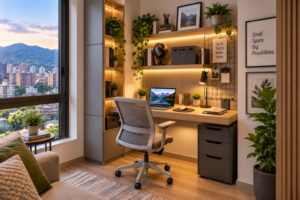
Tall, narrow shelving units can provide useful storage while occupying very little floor area. Floating shelves are another option for books, small plants, decorative objects, or everyday items that would otherwise take up space on tables and counters.
In the kitchen, vertical organizers can make better use of empty wall areas. In bedrooms, shelves above a desk or dresser can provide extra storage without requiring another cabinet.
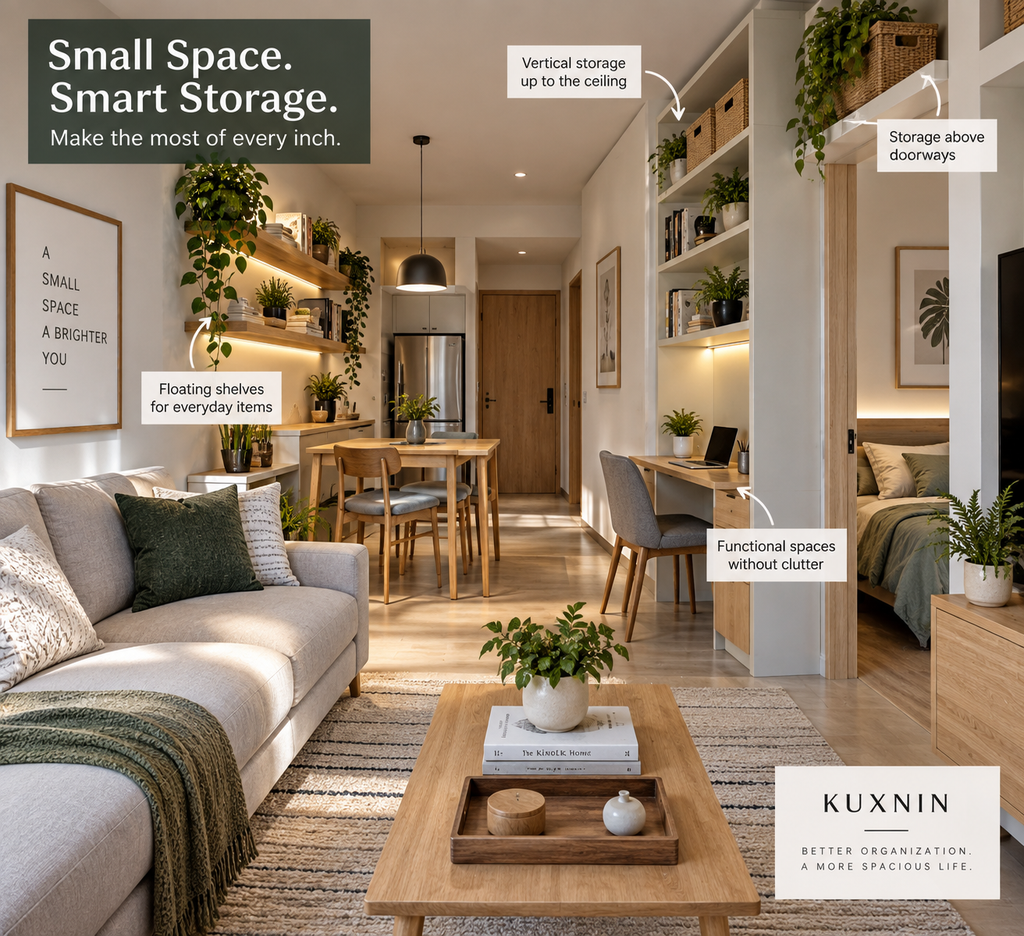
Keep Some Visual Breathing Room
Using vertical storage does not mean covering every wall from floor to ceiling.
Leaving some empty wall space is important because it gives the eye a place to rest. A combination of practical storage and open areas usually feels more spacious than a room filled with shelves, cabinets, and decorations.
Closed storage can also help. Items that are rarely used can be kept inside cabinets, baskets, or boxes instead of remaining visible all day.
The less visual clutter the eye has to process, the calmer and more open a small apartment can feel.
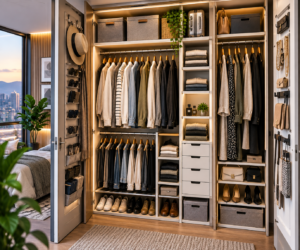
Look for Storage in Unexpected Places
Some of the most useful storage areas in a small apartment are easy to overlook.
The space under a bed can hold seasonal clothing, extra bedding, or shoes. The area above a wardrobe can store items that are only needed occasionally. The back of a door can hold lightweight organizers, while narrow spaces beside furniture may accommodate slim storage units.
The objective is not to fill every available centimeter. It is to move necessary items away from the main living areas so those spaces remain comfortable and visually open.
Make Every Surface Work Smarter
In a small apartment, countertops, tables, nightstands, and other surfaces can quickly become collection points for everyday objects. Keys, chargers, paperwork, kitchen items, and personal belongings may seem harmless individually, but together they can make a room feel much more crowded.
Try to give frequently used items a specific home. A small tray near the entrance can organize keys and wallets. A drawer organizer can keep chargers and accessories out of sight. In the kitchen, keeping only the most frequently used appliances on the counter can immediately create a cleaner appearance.
Clear surfaces do more than improve organization. They create visible open areas that make the apartment feel calmer and more spacious.
Create Zones Instead of Adding More Rooms
Studio apartments and open-plan homes often need one space to perform several functions. Instead of trying to physically divide the apartment with bulky furniture, create simple visual zones.
A rug can define the living area. A compact desk and focused lighting can establish a workspace. A small dining table can create a separate eating area without requiring walls or partitions.
These subtle boundaries help the apartment feel organized while maintaining an open flow.
Avoid the Temptation to Fill Every Empty Corner
An empty corner is not necessarily wasted space.
When living in a small apartment, it is easy to believe that every available area needs a shelf, cabinet, chair, or decorative object. But leaving selected areas empty can actually make the entire home feel larger.
Before adding something new, ask whether it solves a real problem. If it does not provide useful storage, comfort, or function, the empty space may be more valuable.
A small apartment feels bigger when there is a balance between what you use and the space that surrounds it.
Small Changes Can Make a Big Difference
Making a small apartment feel bigger is rarely about one dramatic change. The best results usually come from several small decisions working together.
A better furniture layout can open the walking areas. Natural light and strategically placed mirrors can improve the sense of depth. Vertical storage can free valuable floor space, while hidden storage and cleaner surfaces reduce visual clutter.
Most importantly, every object in a small apartment should have a reason for occupying space. Furniture should provide comfort or function, storage should make everyday life easier, and decorative elements should contribute to the atmosphere without overwhelming the room.
You do not need a larger apartment to create a home that feels comfortable, organized, and inviting. Sometimes the space you need is already there—it simply needs to be used differently.
Keeping a home visually open is also closely connected to reducing unnecessary belongings. Regular decluttering can make a small apartment feel bigger by freeing surfaces, improving movement, and allowing the storage you already have to work more effectively.
Final Thoughts
A small apartment can feel surprisingly spacious when layout, light, storage, and furniture work together.
Start with what you already own before spending money on new solutions. Remove unnecessary items, protect natural light, reconsider oversized furniture, use vertical areas intelligently, and keep frequently used spaces organized.
The objective is not perfection. It is creating a home where moving, working, relaxing, cooking, and storing your belongings feels easier.
And because these improvements do not require major construction, you can make them gradually. Start with one room, observe what makes the biggest difference, and continue from there.
A thoughtfully organized small apartment may still be small on paper, but it can feel significantly bigger in everyday life.