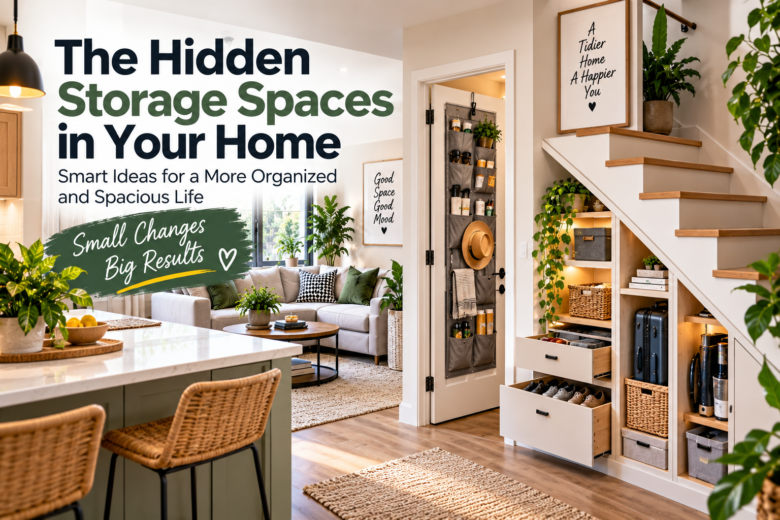
The Hidden Storage Spaces in Your Home You’re Probably Wasting
A small home does not always have a storage problem. Sometimes, the real problem is that much of its available space is simply being overlooked.
Disclaimer: This post contains affiliate links. As an Amazon Associate, I earn from qualifying purchases at no additional cost to you.
Look around a typical apartment or small house and you will probably notice the obvious storage areas first: closets, kitchen cabinets, drawers, shelves, and perhaps a small utility room. Once those spaces become full, it is easy to believe that there is nowhere else to put anything.
But homes contain dozens of spaces that are rarely considered useful.
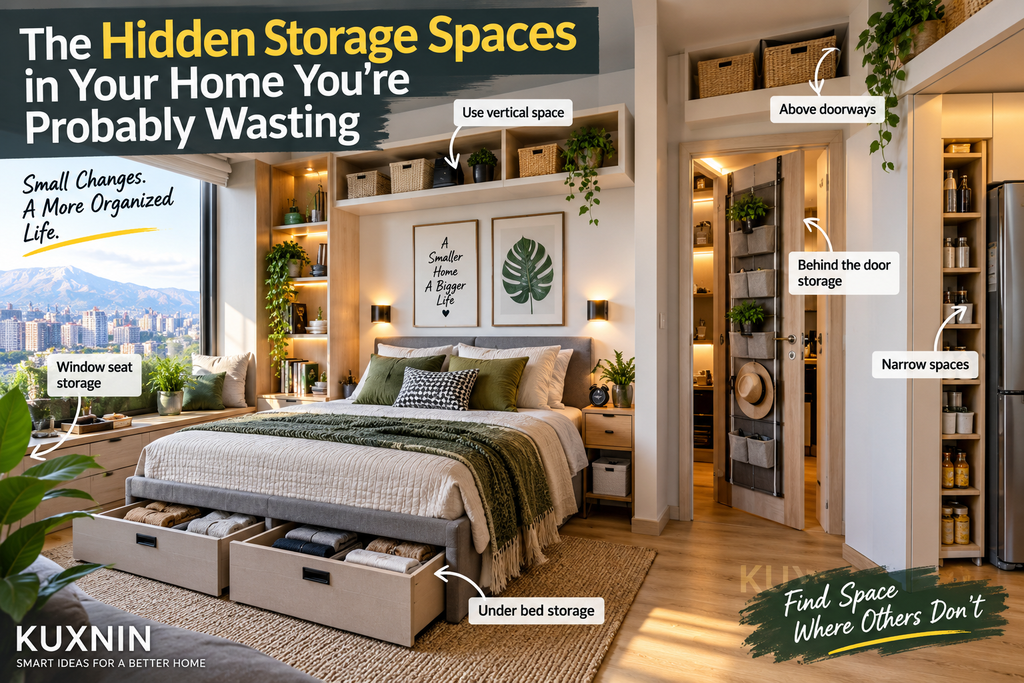
The empty area above a doorway, the narrow gap beside a refrigerator, the space underneath a bed, the back of a closet door, the wall above a desk, and even forgotten corners can become practical storage areas without making a room feel crowded.
The key is not filling every available inch with boxes. Good storage should make a home feel calmer, cleaner, and easier to use.
Start Looking Up Instead of Out
One of the biggest mistakes in a small home is trying to solve every storage problem at floor level. Adding another cabinet, basket, or piece of furniture may provide extra room, but it also takes away valuable walking space.
“One of the smartest ways to reclaim space in a small home is using https://www.amazon.com/s?k=under+bed+storage+with+wheels&tag=kuxnin20-20 which keep extra bedding and clothes neatly organized and out of sight.”
Vertical space offers a different solution.
Walls often have large unused areas above furniture. A sofa may occupy the lower portion of a wall while several feet above it remain completely empty. The same thing happens above desks, beds, washing machines, toilets, and kitchen counters.
Well-positioned shelves or closed wall cabinets can transform these areas into useful storage without reducing the usable floor area.
The highest shelves do not need to hold things you use every day. They are ideal for seasonal decorations, extra blankets, travel bags, documents, or other belongings that only need to be accessed occasionally.
This approach allows frequently used items to remain within easy reach while less frequently used belongings move into spaces that would otherwise serve no purpose.
The Space Under Your Bed Can Become a Hidden Closet
In many bedrooms, one of the largest unused storage areas is directly underneath the bed.
A standard bed occupies a significant portion of the room, yet the area beneath it is often left empty or becomes a place where random objects disappear.
Using low-profile storage containers can completely change that.
Seasonal clothing, shoes, spare sheets, blankets, bags, and other bulky items can be organized underneath the bed while remaining completely out of sight.
Beds with built-in drawers or lifting platforms can provide even more storage. In very small bedrooms, this can reduce the need for an additional dresser or cabinet.
The goal is to treat the space beneath the bed as intentional storage rather than forgotten space.
The Forgotten Space Behind Doors
Doors take up almost no usable floor space, yet the area behind them can become surprisingly valuable.
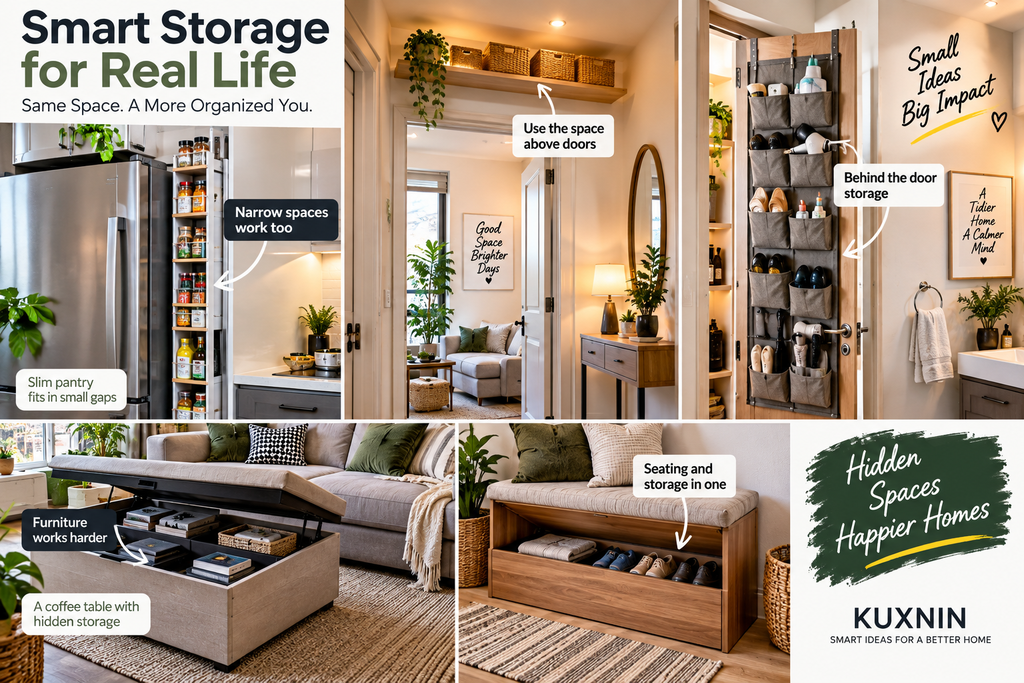
An over-the-door organizer can hold shoes, accessories, cleaning supplies, bathroom products, craft materials, or children’s belongings. In a kitchen or pantry, a shallow organizer can even store spices, small containers, reusable bags, and other everyday items.
The important thing is to keep the storage relatively flat. If an organizer becomes too bulky, the door may become difficult to open and the room can begin to feel cluttered.
Closet doors are especially useful because anything stored behind them disappears from view when the closet is closed.
There Is More Space Above Your Doors Than You Think
Now look above the doorway itself.
Most homes have an empty strip of wall between the top of the door frame and the ceiling. It is rarely used, but a simple shelf installed in this area can provide storage without interfering with the room.
Because this space is high, it works best for items that are not needed every day. Decorative baskets can hold seasonal accessories, extra towels, small travel items, or household supplies.
Using matching containers can make the shelf look intentional rather than improvised.
In a small bathroom, bedroom, laundry area, or hallway, this forgotten space can add useful capacity while keeping everything off the floor.
Narrow Gaps Can Become Surprisingly Useful
A few inches between furniture and a wall may not seem important, but narrow spaces can be incredibly useful when storage is designed specifically for them.
Consider the gap beside a refrigerator. A slim rolling pantry can fit into a space that might otherwise collect dust. It can store canned food, spices, bottles, cleaning products, or kitchen supplies.
The same idea works beside a washing machine, desk, wardrobe, or bathroom vanity.
Instead of automatically assuming that a narrow gap is useless, measure it. Sometimes a space only six or eight inches wide can become one of the most practical storage areas in the room.
Furniture Can Do More Than One Job
In a small home, furniture becomes much more valuable when it serves two purposes.
A bench can provide seating while hiding shoes or blankets inside. An ottoman can hold books, toys, or electronics. A coffee table with drawers can replace several small storage baskets. Even a window seat can become a large concealed compartment.
This type of furniture keeps belongings close to where they are actually used while reducing the number of separate cabinets and storage units needed throughout the home.
The result is not simply more storage. It is less visual clutter, which can make even a very small room feel noticeably larger.
Corners Do Not Have to Stay Empty
Corners are another area that often gets ignored because standard furniture does not always fit them well. But with the right solution, an empty corner can become useful without making the room feel smaller.
Floating corner shelves are excellent for books, plants, decorative objects, or small everyday items. In a kitchen, corner shelving can hold frequently used ingredients or cookware. In a bathroom, a narrow corner cabinet can organize towels and toiletries.
The secret is to avoid overcrowding. A corner should feel intentionally used, not packed with everything that could not fit somewhere else.
Look at the Space Above Your Cabinets
Kitchen cabinets and wardrobes often stop before reaching the ceiling, leaving a large horizontal area unused.
That space can be particularly useful for bulky or seasonal items.
Matching baskets or attractive storage boxes can hold rarely used kitchen equipment, picnic supplies, holiday decorations, extra linens, or other belongings that do not need to occupy your most accessible cabinets.
Keeping the containers visually consistent is important. Several mismatched boxes can make a room look cluttered, while a row of similar baskets can actually become part of the design.
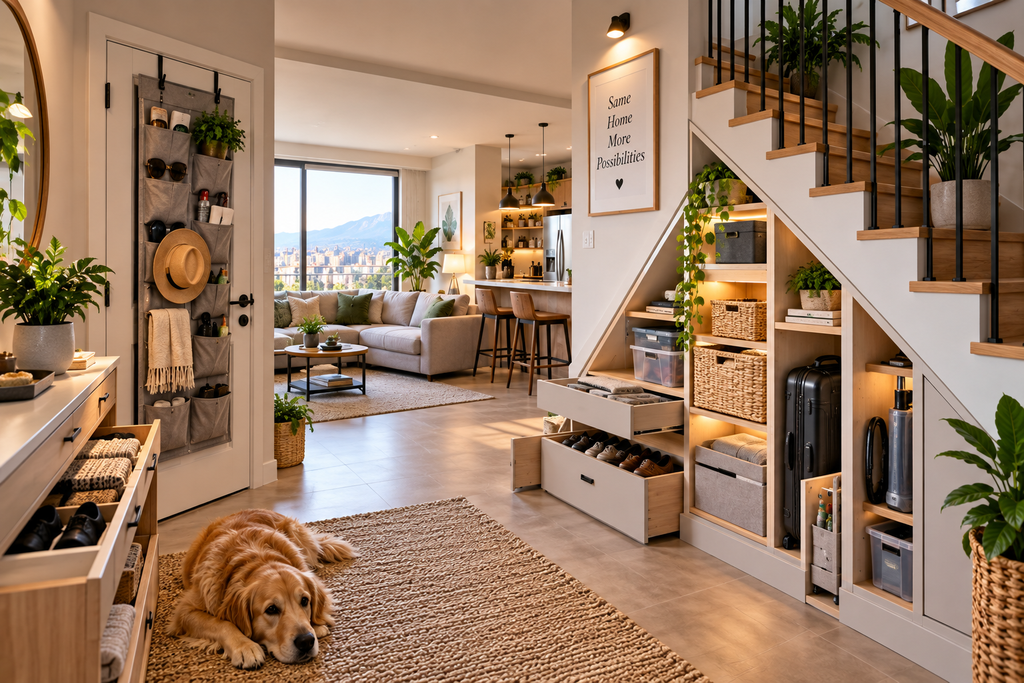
Do Not Forget the Space Under Stairs
If your home has stairs, the area underneath them can offer much more than an awkward empty corner.
Depending on the layout, it can become a compact home office, a shoe cabinet, a bookshelf, a cleaning-supply station, or a series of pull-out drawers.
Closed storage works especially well here because it allows a surprisingly large number of belongings to disappear behind a clean surface.
Even a very shallow section beneath the stairs may be useful for hooks, shelves, or narrow cabinets.
The Best Storage Is the Storage You Barely Notice
Creating more storage does not mean covering every wall with shelves or filling every corner with containers.
The most successful small homes often appear simple because their storage has been integrated into the space rather than added as an afterthought.
Before buying another cabinet, take a slow walk through your home and look for the areas you normally ignore: above, below, behind, between, and inside.
You may discover that the extra storage you thought you needed was already there.
The difference is simply learning how to see it.
A More Organized Home Starts With What You Already Have
It is easy to assume that better organization requires a larger home, expensive furniture, or an entirely new storage system. In reality, some of the most effective improvements begin by using the space that already exists.
Start with one room instead of trying to reorganize the entire home at once. Identify the places where clutter tends to accumulate and then look nearby for unused vertical space, hidden gaps, empty corners, or furniture that could provide additional storage.
Small changes can have a surprisingly large effect. Moving seasonal belongings to higher shelves can free an entire closet. Using the space beneath a bed can eliminate the need for another piece of furniture. Turning a narrow gap into storage can clear a crowded countertop.
Think Differently About Every Inch
A small home can feel spacious when every area has a clear purpose.
The goal is not to own endless storage containers. It is to create a home where belongings are easy to find, frequently used items are accessible, and unnecessary clutter does not dominate the rooms.
Once you begin noticing hidden storage spaces, you may start seeing your home differently. Areas that once seemed useless suddenly become opportunities.
And sometimes, finding more room does not require adding more space at all.
It simply requires using the space you already have more intelligently.