Small Apartment Pantry Ideas That Make Every Inch Count
Living in a small apartment often means learning how to make every inch work harder, and the kitchen is usually one of the biggest challenges. Limited cabinets, narrow shelves, and almost no dedicated pantry space can quickly make groceries feel disorganized. The good news is that you do not need a large walk-in pantry to create a practical and attractive food storage system.
With the right small apartment pantry ideas, even an unused corner, a narrow wall, the back of a door, or a few inches beside the refrigerator can become valuable storage. The goal is not simply to fit more food into a small area. A successful pantry should make everyday items easy to see, easy to reach, and simple to put back after use.
Before buying organizers or adding shelves, take a close look at the space you already have. Empty cabinets often contain unused vertical space above cans, jars, and packages. Deep shelves may hide food at the back, while countertops become crowded with items that could be stored elsewhere. Identifying these wasted areas is the first step toward creating a pantry that feels larger without actually increasing the size of your kitchen.
- Use Vertical Space Before Adding More Furniture
When floor space is limited, look upward. Vertical storage is one of the most effective ways to increase pantry capacity in a small apartment without making the kitchen feel crowded.
Tall, narrow shelving can hold dry goods, baskets, jars, snacks, and frequently used ingredients while occupying very little floor space. Inside existing cabinets, stackable shelf risers can create an additional level for cans, spices, bowls, or packaged foods.
Do not overlook the space above cabinets either. Attractive baskets or matching containers can hold items you use less frequently. Keeping everyday products at eye level and occasional-use items higher up makes the entire system easier to maintain.
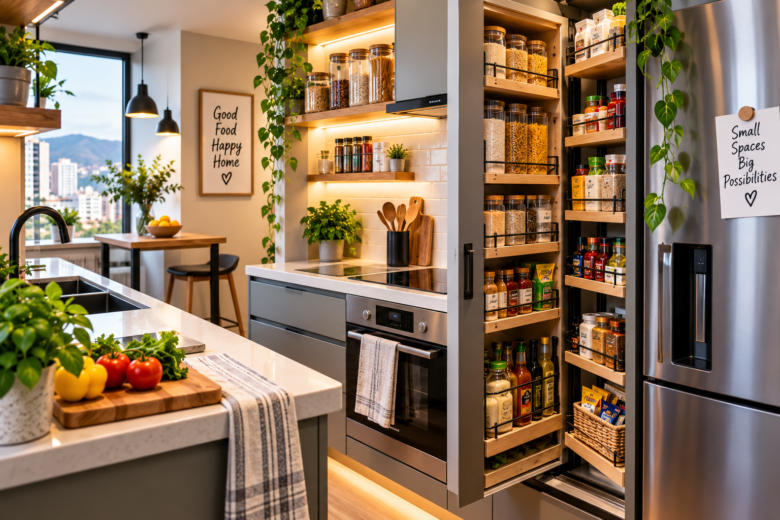
- Turn a Narrow Gap Into a Hidden Pantry
The small gap beside a refrigerator or cabinet may look useless, but it can become one of the smartest storage areas in the kitchen. A slim rolling pantry can fit into these narrow spaces and provide several levels of storage for canned foods, sauces, spices, snacks, and other small packages.
Because the unit slides out when needed and disappears when it is not being used, it adds storage without visually overwhelming the room. Measure the available width, depth, and height carefully before choosing a rolling unit so that it can move freely.
- Make Deep Cabinets Easier to Use
Deep cabinets provide plenty of space, but they can easily become frustrating when products disappear behind one another. Instead of filling the shelf from front to back with loose packages, organize foods into removable bins or baskets.
Create simple groups such as breakfast foods, baking supplies, snacks, pasta, canned goods, and quick meals. When you need something, you can pull out the entire container instead of moving several products individually.
Clear containers are especially useful because you can immediately see what is inside. This simple change can also help prevent forgotten food and unnecessary duplicate purchases.
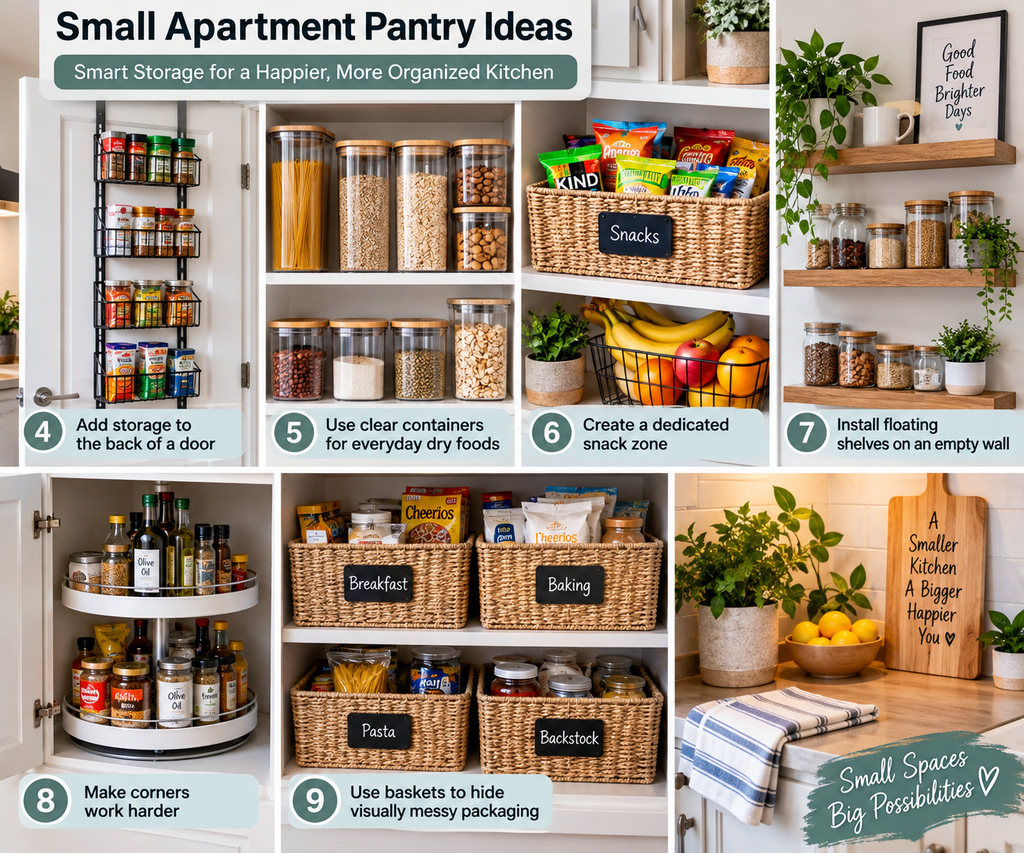
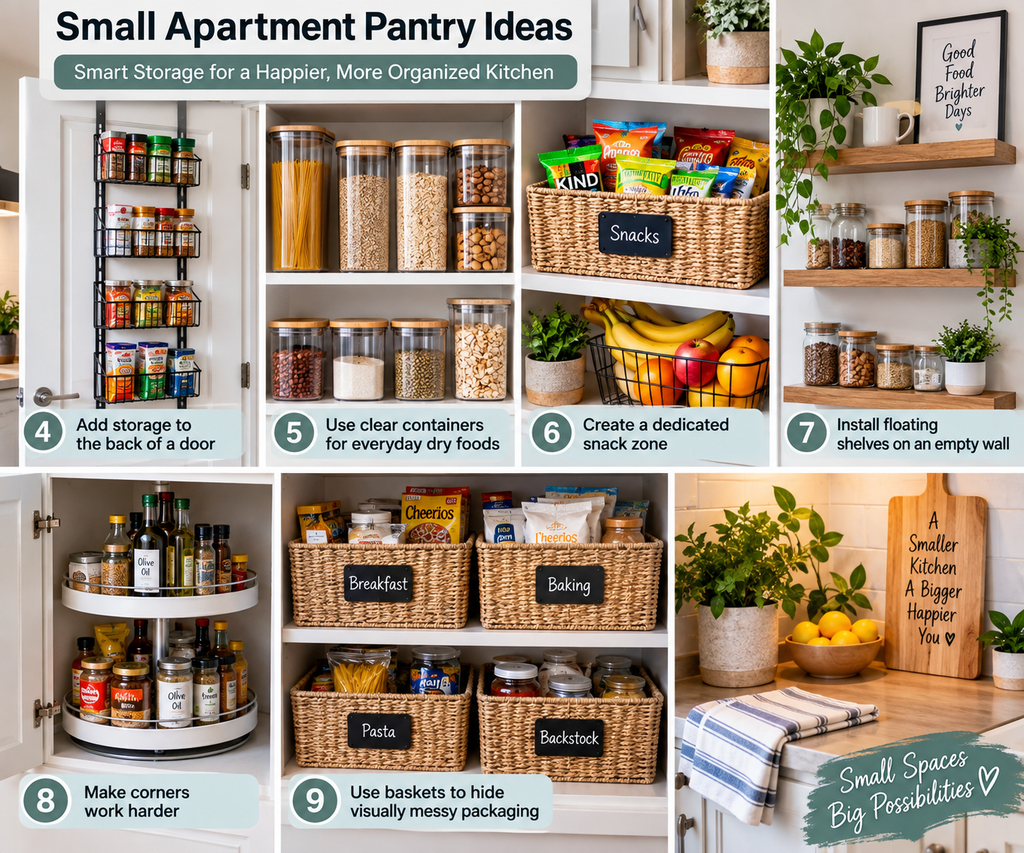
- Add Storage to the Back of a Door
The back of a pantry, kitchen, or utility door is often completely unused. In a small apartment, this surface can provide valuable storage without taking away any floor or counter space.
A slim over-the-door organizer can hold spices, snacks, small jars, packets, cleaning supplies, or frequently used kitchen essentials. Choose shallow storage so the door can still close comfortably and avoid placing very heavy items on it.
If your kitchen does not have a traditional pantry door, the inside of a cabinet door can serve the same purpose. Small racks or organizers can keep lightweight products visible and within easy reach.
- Use Clear Containers for Everyday Dry Foods
Rice, pasta, cereal, flour, sugar, oats, and other dry ingredients often come in bulky packaging that wastes valuable cabinet space. Transferring frequently used foods into stackable containers can create a cleaner and more efficient pantry.
Choose containers that fit the depth and height of your shelves rather than buying a large matching set without measuring first. Rectangular containers generally use space more efficiently than round ones because they can sit closely together.
Clear containers also make it easier to see when something is running low. Simple labels can help everyone in the home return ingredients to the correct place and keep the pantry organized over time.
- Create a Dedicated Snack Zone
Snacks can quickly create clutter because they often come in packages of different shapes and sizes. Instead of spreading them throughout several cabinets, create one dedicated snack area.
Use one or two baskets for granola bars, crackers, nuts, dried fruit, or other everyday snacks. If children use the pantry, place appropriate snacks on a lower shelf where they can reach them without disturbing the rest of the storage system.
Keeping similar items together also makes grocery shopping easier because you can quickly see what needs to be replaced.
- Install Floating Shelves on an Empty Wall
A small section of unused kitchen wall can become an attractive open pantry with a few well-positioned floating shelves.
Use the shelves for matching jars, coffee supplies, spices, cookbooks, baskets, or attractive food containers. To prevent the kitchen from looking cluttered, avoid filling every inch. Leave some visual space between groups of items.
Floating shelves work especially well when there is not enough room for another cabinet or freestanding storage unit. They add useful storage while keeping the floor completely clear.
- Make Corners Work Harder
Kitchen corners are frequently underused because standard shelves can make them difficult to access. A small corner shelving unit, rotating organizer, or tiered shelf can turn these awkward areas into practical pantry storage.
Rotating organizers are particularly useful for sauces, oils, jars, condiments, and spices. Instead of reaching behind several products, you can rotate the organizer and bring the item you need to the front.
The key is to avoid overcrowding the corner. A smaller, well-organized system is usually more useful than trying to squeeze too many products into the available space.
- Use Baskets to Hide Visually Messy Packaging
Not every pantry product looks attractive on an open shelf. Bright packaging, partially used bags, and differently shaped boxes can make a small kitchen feel more cluttered than it actually is.
Baskets provide an easy solution. Use them to group similar products while creating a calmer and more consistent appearance. Woven baskets can add warmth, while simple metal or plastic bins can create a more modern look.
Label each basket according to its purpose, such as Snacks, Breakfast, Baking, Pasta, or Backstock. The labels should make the system easier to use rather than overly complicated.
- Use the Space Under Your Kitchen Cabinets
The area underneath upper cabinets can provide useful storage without taking up additional counter space. Small hanging racks, hooks, or under-cabinet organizers can hold mugs, utensils, paper towels, or lightweight kitchen essentials.
This strategy works especially well in very small kitchens where every drawer and shelf is already being used. Keep the arrangement simple so the area still looks clean and does not interfere with food preparation.
- Create a Mini Pantry on a Rolling Cart
If your apartment does not have a dedicated pantry, a compact rolling cart can become one. Choose a narrow cart with several levels and use it for dry foods, produce, beverages, baking supplies, or breakfast essentials.
The biggest advantage is flexibility. You can keep the cart beside a cabinet during everyday use and move it when you need additional floor space. Baskets or small containers on each level can prevent items from shifting and help keep categories organized.
- Store Frequently Used Foods at Eye Level
A pantry becomes much easier to use when the products you reach for every day are immediately visible. Reserve eye-level shelves for frequently used foods such as cereal, rice, pasta, coffee, snacks, or cooking essentials.
Less frequently used products can go higher, while heavier items are usually safer on lower shelves. This simple arrangement reduces unnecessary searching and helps keep the pantry organized after grocery shopping.
- Take Advantage of the Space Above the Refrigerator
The area above the refrigerator is often forgotten, yet it can provide valuable storage in a small apartment. Use baskets or attractive containers to store lightweight items that you do not need every day.
Extra paper products, reusable shopping bags, serving accessories, or backup pantry supplies can work well here. Avoid creating an unstable pile. A few organized containers will look better and be much easier to access.
- Create a Simple First-In, First-Out System
More storage is useful only when the food inside it does not get forgotten. When you bring groceries home, move older products toward the front and place newer products behind them.
This simple habit encourages you to use older food first and can reduce unnecessary waste. It is especially helpful for canned goods, packaged foods, sauces, and other products that may remain in the pantry for several months.
Before shopping, take a quick look through each pantry zone. Knowing what you already have can prevent duplicate purchases and help save both money and space.
- Keep Countertops as Clear as Possible
In a small kitchen, crowded countertops can make the entire room feel smaller. Try to keep only the appliances and products you genuinely use every day on display.
Move occasional-use appliances into cabinets, place loose foods into pantry zones, and use vertical storage whenever possible. Even freeing a small section of countertop can create noticeably more preparation space.
A clear counter also makes the kitchen easier to clean and gives the room a calmer, more spacious appearance.
- Use Stackable Storage to Double Shelf Capacity
One of the easiest ways to create more pantry space is to take advantage of the empty area above shorter products. Stackable bins, shelf risers, and containers can turn one shelf into two useful storage levels.
For example, canned goods can be arranged on tiered organizers so the labels remain visible, while smaller containers can be stacked safely above one another. This prevents products from becoming hidden behind tall packages and makes it easier to find ingredients while cooking.
Before purchasing organizers, measure the height, width, and depth of each shelf. Storage solutions work best when they are chosen specifically for the available space rather than simply added because they look attractive.
- Build a Pantry System Around Your Daily Routine
The best small pantry is not necessarily the one with the most containers or shelves. It is the one that matches the way you actually live.
Think about what you prepare most often. If breakfast is an important part of your routine, keep cereal, oats, coffee, and other breakfast essentials together. If you cook frequently, create an easy-to-reach zone for oils, spices, grains, pasta, and other everyday ingredients.
You can also create a small meal-preparation section where ingredients for upcoming meals are grouped together. This can make busy weekdays easier and prevent food from getting lost at the back of a cabinet.
The system does not need to be perfect. It needs to be simple enough that everyone in the home can maintain it. When every category has a logical place, putting groceries away becomes faster and keeping the kitchen organized requires much less effort.
A Small Pantry Can Make a Big Difference
Creating useful pantry storage in a small apartment is not about fitting as many products as possible into every available corner. It is about making the space easier to use.
Start with the areas that are currently being wasted. Look above shelves, behind doors, beside the refrigerator, inside deep cabinets, and on empty walls. Then choose storage solutions that solve a specific problem rather than adding organizers simply for decoration.
The most effective small apartment pantry ideas combine vertical storage, clear containers, baskets, flexible shelving, and simple organization habits. Together, these changes can transform even a very small kitchen into a space that feels more open, practical, and comfortable.
You do not have to make all 17 changes at once. Start with one difficult cabinet or one cluttered shelf. Once that area works better, move to the next. Small improvements can gradually create a pantry system that saves space, reduces food waste, makes grocery shopping easier, and helps your entire kitchen feel more organized.
A small apartment may limit the amount of space you have, but it does not have to limit how well that space works.