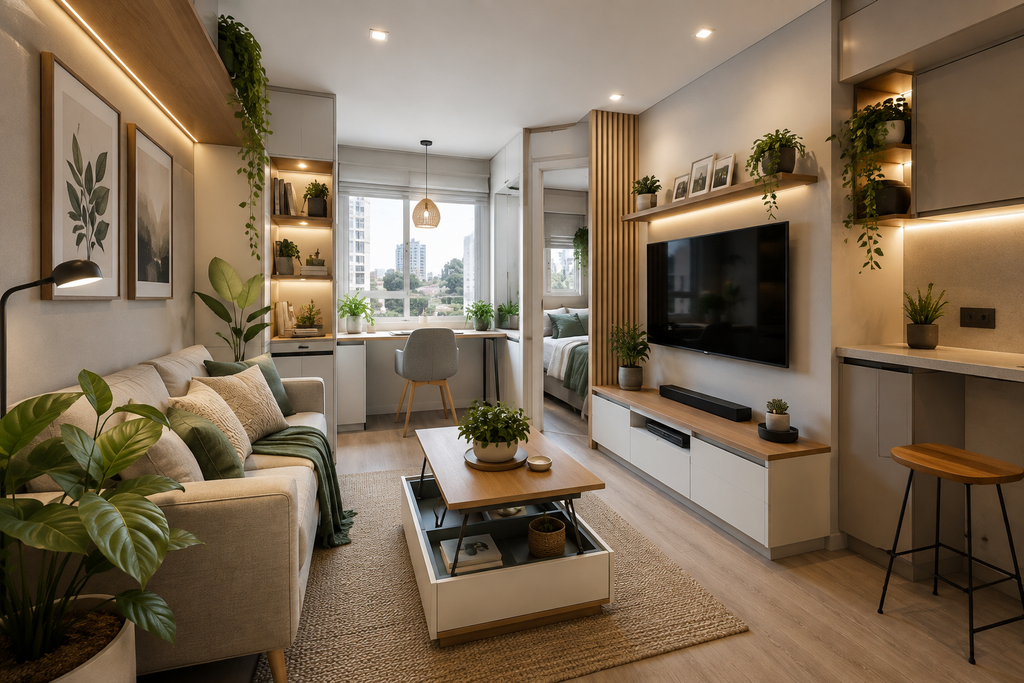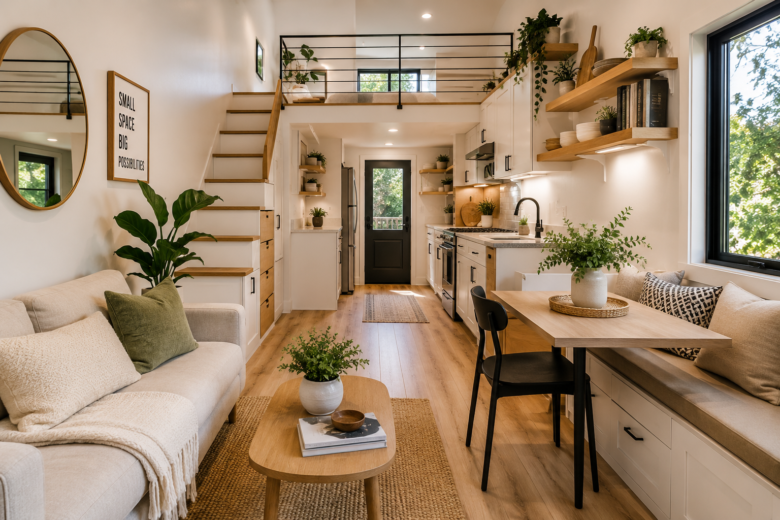
Making a small home feel bigger is easier when every area is designed with intention, smart organization, and practical furniture choices.
- Choose Furniture That Fits the Room
Large furniture can quickly overwhelm a small space. Instead of filling a room with oversized pieces, choose furniture that matches its proportions and leaves enough space to move comfortably. A compact sofa, narrow table, or smaller armchair can provide everything you need without making the room feel crowded.
- Use Natural Light Whenever Possible
Natural light can dramatically change how spacious a room feels. Keep windows as clear as possible and consider lightweight curtains that allow daylight to enter. Placing a mirror near a window can also help reflect light throughout the room, creating a brighter and more open atmosphere.
- Take Advantage of Vertical Space
When floor space is limited, walls become valuable storage areas. Floating shelves, tall bookcases, hooks, and wall-mounted organizers can provide additional storage without occupying precious floor space. Keeping everyday objects organized vertically also reduces visual clutter and makes the room easier to maintain.
- Use Vertical Space for Storage
When floor space is limited, look upward. Floating shelves, tall bookcases, wall-mounted organizers, and hooks can provide useful storage without taking up valuable walking space. Keeping everyday items organized vertically also reduces visual clutter and makes the room feel cleaner, calmer, and more comfortable.
- Choose Multipurpose Furniture
In a small home, every piece of furniture should earn its place. Look for items that can serve more than one purpose, such as an ottoman with hidden storage, a sofa bed for guests, or a dining table that can also work as a desk. Multipurpose furniture helps reduce clutter while keeping your home practical and comfortable.
- Keep Surfaces Clear and Organized
Too many objects on tables, countertops, and shelves can make even a well-designed room feel smaller. Keep frequently used items within easy reach and store everything else in baskets, drawers, or cabinets. A few carefully chosen decorative objects can add personality without overwhelming the space.
- Create Defined Areas Without Closing the Space
Even a small home can have separate areas for working, relaxing, dining, and sleeping. Instead of using solid walls or bulky dividers, define each area with a rug, lighting, furniture placement, or subtle changes in decoration. This creates a sense of order while maintaining an open and spacious feeling.
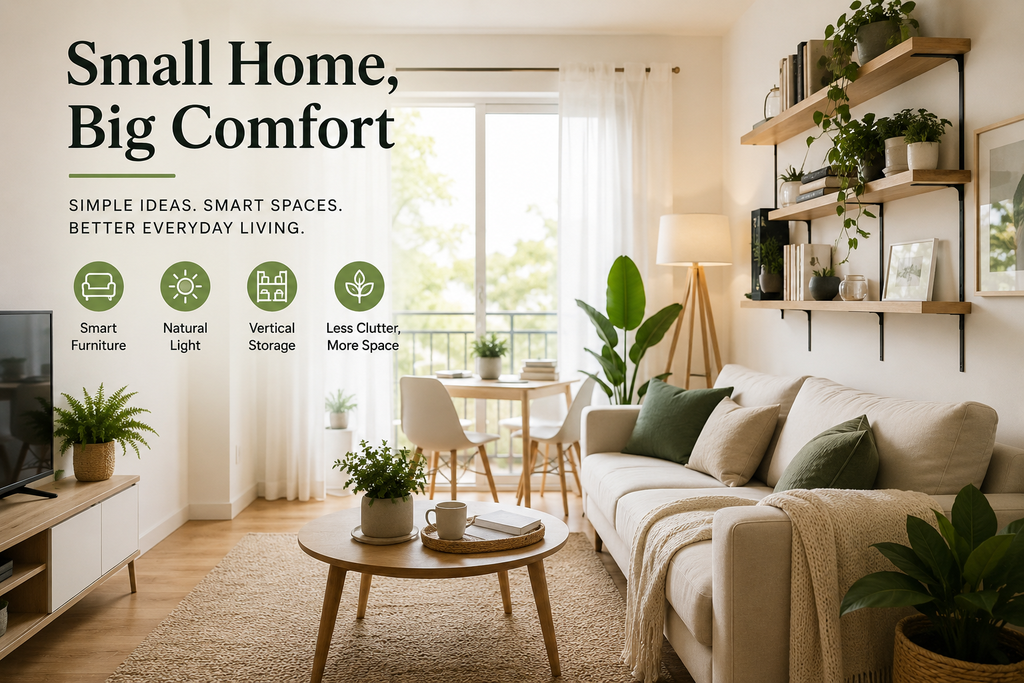
Small Changes Can Make a Big Difference
Making a small home feel larger does not require an expensive renovation. Simple changes such as removing unnecessary objects, improving lighting, and rearranging furniture can completely change how a room feels. The goal is to create breathing room while keeping the things that make your home comfortable and personal.
Think About How You Use Each Room
Before buying new furniture or decorations, consider how you actually use each area of your home. A corner that is rarely used could become a practical workspace, reading area, or additional storage zone. Designing around your daily routine helps you make better use of limited space and prevents unnecessary clutter.
Avoid These Common Small-Space Mistakes
One common mistake is filling every available wall and corner with furniture or decorations. Another is choosing oversized pieces simply because they look attractive in a showroom. Leaving some open space is important because it gives the eye a place to rest and makes the entire room appear more spacious and organized.
Make Comfort a Priority
A home should not only look spacious; it should also feel comfortable. Choose furniture that supports your daily activities, use soft textiles to create warmth, and keep frequently used items easy to reach. A well-organized small home can be both practical and relaxing without sacrificing personal style.
Keep Your Home Flexible
Small spaces work best when they can adapt to different activities. Lightweight chairs, movable tables, folding furniture, and storage baskets make it easier to reorganize a room when your needs change. This flexibility allows the same space to serve several purposes throughout the day.
Final Thoughts
Making a small home feel bigger and more comfortable is about using the space you already have more effectively. Natural light, appropriate furniture, smart storage, organization, and thoughtful decoration can make a noticeable difference. Start with one or two simple changes and gradually improve each area until your home feels open, functional, and welcoming.
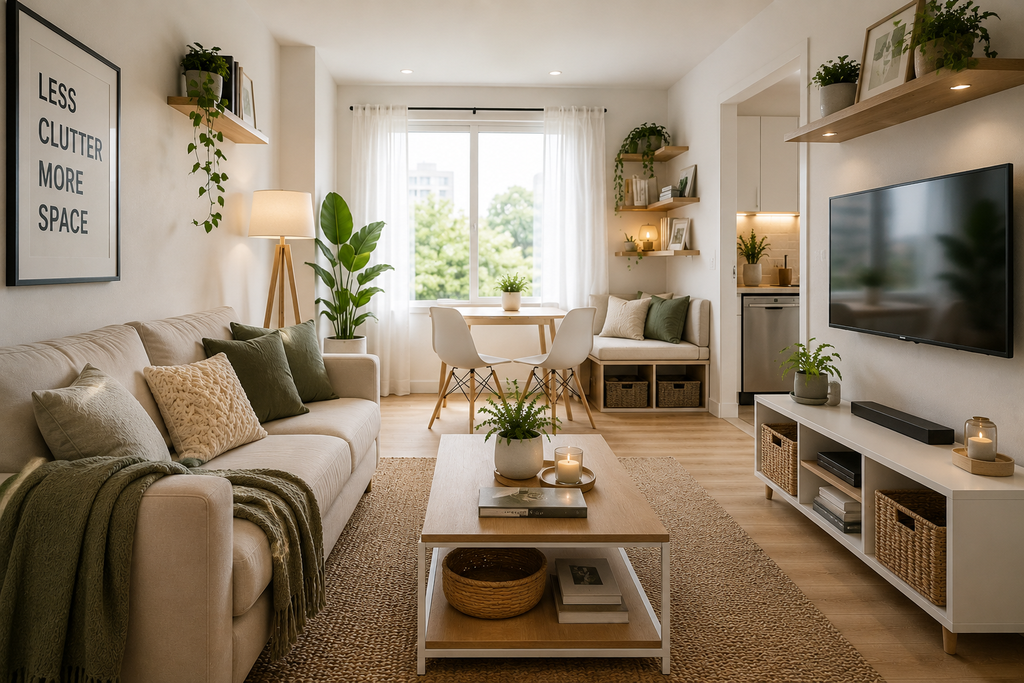
- Use Vertical Space to Keep the Floor Clear
In a small home, walls can provide valuable storage without taking away precious floor space. Floating shelves, tall bookcases, wall-mounted cabinets, and hooks can help organize everyday items while keeping rooms open and easy to move through. Using vertical space also draws the eye upward, which can make ceilings appear higher and the entire room feel more spacious.
- Choose Light Colors to Create an Open Feeling
Light colors can reflect natural and artificial light throughout a room, helping compact spaces feel brighter and more open. Soft whites, warm beige, pale gray, and other neutral tones work especially well on walls and larger pieces of furniture. You can still introduce personality with cushions, artwork, plants, or decorative accessories without making the room feel visually crowded.
- Use Mirrors to Make Small Rooms Feel Larger
Mirrors are one of the simplest ways to create a greater sense of depth in a small home. Placing a large mirror near or opposite a window can reflect daylight and visually extend the room. Instead of using many small mirrors, consider one well-positioned statement mirror that complements the style of the space while making it feel brighter and more expansive.
- Keep Surfaces Clear and Reduce Visual Clutter
Even a well-designed small room can feel cramped when tables, countertops, and shelves are overloaded. Keep frequently used items within reach, but store less important belongings inside drawers, baskets, or closed cabinets. A few carefully selected decorative pieces can create more impact than many small objects and help your home maintain a clean, comfortable, and organized appearance.
- Select Multifunctional Furniture
Multifunctional furniture can make a major difference when every square meter matters. Consider an ottoman with hidden storage, a sofa bed for overnight guests, an extendable dining table, or a bench with drawers underneath. Pieces that perform more than one function reduce the amount of furniture you need and allow the same room to adapt to different activities throughout the day.
- Let Natural Light Travel Through the Home
Natural light can dramatically change how spacious a small home feels. Avoid blocking windows with bulky furniture or heavy curtains, and choose lightweight window treatments that allow daylight to enter. Keeping areas near windows relatively open helps light travel deeper into the room, creating a brighter and more welcoming atmosphere.
- Create Defined Areas Without Building Walls
Small homes often need one room to serve several purposes. Instead of adding walls that can make the space feel tighter, define different areas with rugs, lighting, furniture placement, or open shelving. For example, a rug can visually separate the living area while a slim bookshelf can distinguish a workspace without completely blocking light or sightlines.
- Make Every Corner Useful
Unused corners can become valuable functional spaces with a little planning. A narrow desk can create a compact work area, corner shelves can provide additional storage, and a small chair with a lamp can transform an empty spot into a comfortable reading nook. The goal is not to fill every available space, but to make overlooked areas useful without creating clutter.
- Maintain a Simple Organization Routine
Making a small home feel bigger is not only about furniture and decoration. Daily organization also plays an important role. Take a few minutes each day to return items to their designated places, clear countertops, and remove objects that are no longer needed. Simple habits can prevent clutter from accumulating and help the home maintain the open, comfortable feeling created by your design choices.
Final Thoughts
A small home does not have to feel restrictive. Thoughtful furniture choices, effective storage, natural light, mirrors, neutral colors, and careful organization can completely change how a compact space looks and feels. The most important idea is to make every area serve a clear purpose without overcrowding it.
Start with one room and make small improvements rather than trying to transform everything at once. As unnecessary clutter disappears and each area becomes more functional, your home can begin to feel brighter, calmer, and surprisingly spacious.
These simple changes can make a small home feel bigger while creating a more comfortable, organized, and enjoyable place to live.