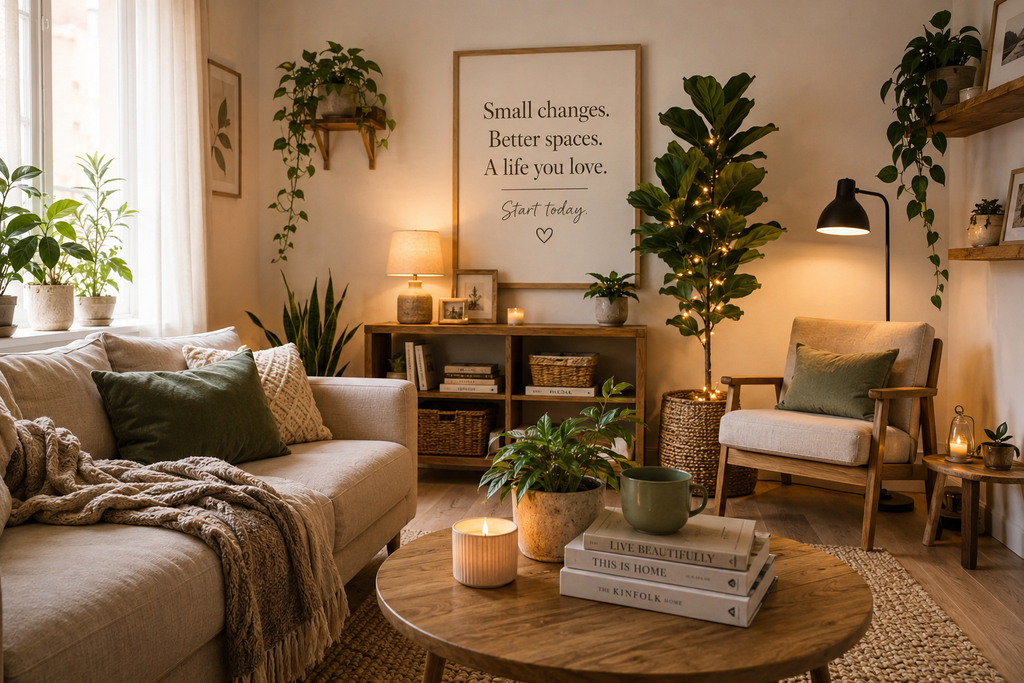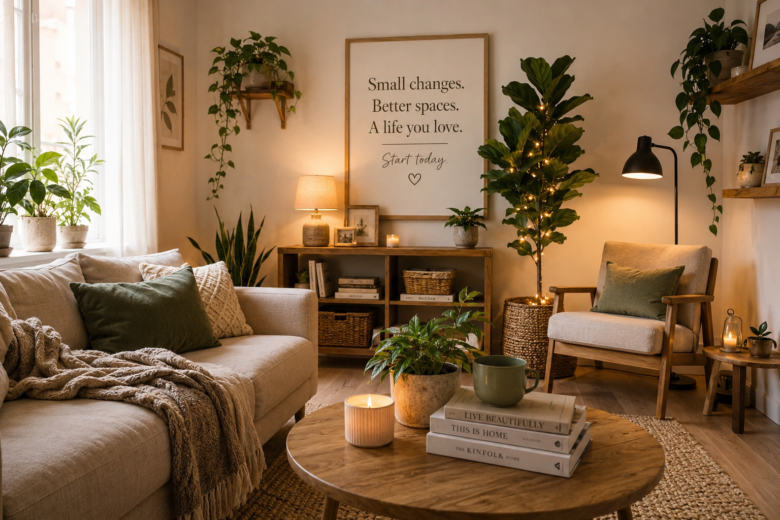
Small changes that can transform your home can have a surprisingly powerful effect without requiring an expensive renovation. Adjusting the lighting, reorganizing a forgotten corner, introducing natural textures, or simply changing the way furniture is positioned can completely alter how a room looks and feels. The secret is not necessarily spending more money—it is understanding how everyday details influence the atmosphere of your home.
Small improvements can also make a home work better for the people living in it. A brighter workspace may make mornings more productive, a calmer bedroom can encourage better rest, and a well-organized entrance can make the entire house feel less chaotic. When these changes are made intentionally, even a modest apartment or small house can feel more spacious, personal, and enjoyable.
Below are 15 practical changes that can help transform your home without requiring a major remodeling project. Some can be completed in an afternoon, while others can be introduced gradually. Together, they can create a space that feels noticeably different.
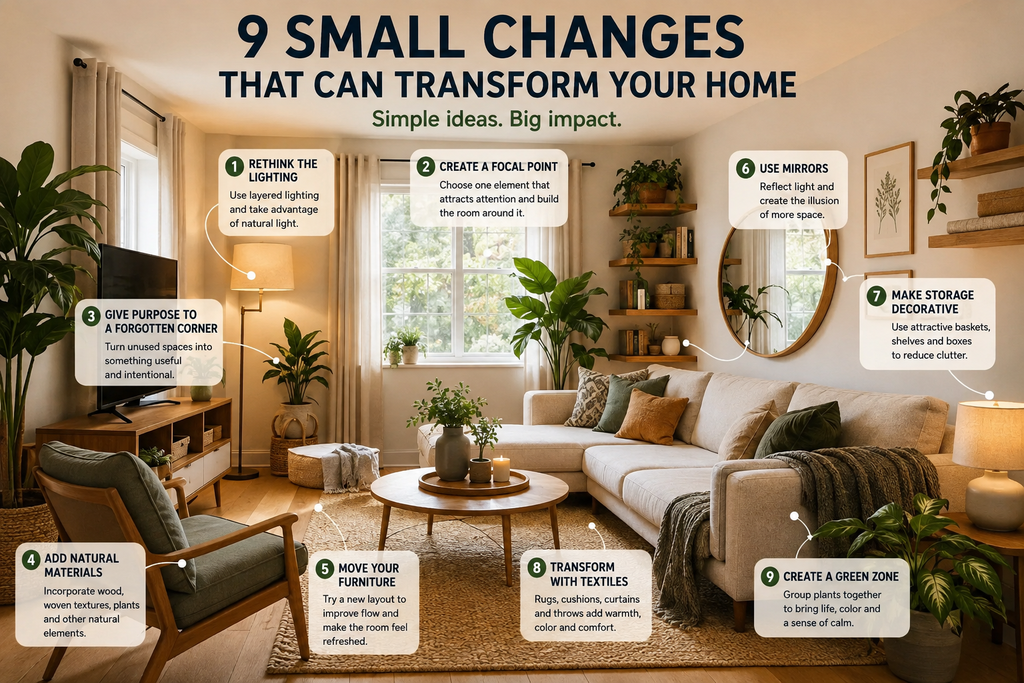
- Rethink the Lighting Before Changing Anything Else
Lighting is one of the easiest elements to overlook, yet it has an enormous influence on how we perceive a room. A beautifully decorated space can still feel cold or uncomfortable when it relies on a single harsh ceiling light. Instead of illuminating everything from one source, try creating several layers of light throughout the room.
A floor lamp beside a sofa, a small table lamp on a shelf, or subtle lighting near a workspace can create depth and make different areas feel more intentional. During the daytime, take advantage of natural light whenever possible. Heavy curtains, furniture positioned directly in front of windows, and unnecessary objects on windowsills can reduce the amount of daylight entering a room.
The temperature of artificial lighting matters as well. Warmer light can create a relaxing atmosphere in bedrooms and living areas, while brighter neutral lighting may work better in kitchens and workspaces. Before buying new furniture or decorations, experimenting with lighting can reveal that the room already has much more potential than you thought.
- Create One Strong Focal Point
Rooms often feel visually confusing when too many objects compete for attention. Instead of filling every wall and surface with decorations, choose one element that immediately attracts the eye when someone enters the room.
The focal point does not have to be expensive. It could be a large piece of artwork, an interesting mirror, a textured wall, a distinctive plant, a bookshelf, or even a beautifully arranged seating area. Once you choose it, allow the surrounding elements to support it rather than compete with it.
This approach can be especially effective in smaller homes. A strong focal point gives the eye somewhere to rest and creates a sense of organization. Removing a few unnecessary decorative objects may actually make the remaining pieces appear more important and sophisticated.
- Give an Forgotten Corner a Real Purpose
Almost every home has an awkward corner that slowly becomes a place for bags, boxes, cables, or objects that have nowhere else to go. Instead of treating that area as wasted space, turn it into something useful.
A narrow corner can become a compact reading area with a comfortable chair and lamp. A small section near a window might become a workspace with a slim desk. An empty wall can hold floating shelves for books, plants, or frequently used objects. Even a tiny corner near the entrance can become an organized station for keys, shoes, and everyday essentials.
The goal is not to fill every available centimeter. It is to make previously ignored areas contribute something to daily life. When every important zone has a clear purpose, the entire home tends to feel larger and more organized.
- Introduce Natural Materials and Textures
Modern homes often contain many smooth surfaces: screens, painted walls, glass, plastic, and metal. Adding natural textures can soften these environments and make them feel warmer and more welcoming.
Wood, linen, cotton, woven baskets, ceramic pieces, stone, and natural fibers can introduce visual variety without overwhelming a room. You do not need to replace existing furniture. Something as simple as a wooden tray, textured cushions, a woven basket, or a ceramic planter can change the character of a space.
Plants can provide another layer of natural texture. Even one healthy plant placed in the right location can introduce color and movement into an otherwise plain room. The key is moderation: choose a few materials that complement each other instead of adding many unrelated decorative elements.
- Move Your Furniture Away From Its Usual Position
Furniture placement can completely change the way a room feels, yet many people keep their furniture in the same position for years. Before buying anything new, experiment with what you already have. Moving a sofa slightly away from the wall, changing the angle of a chair, or relocating a small table may improve both circulation and appearance.
Start by thinking about how you actually move through the room. There should be comfortable paths between doors, seating areas, and frequently used spaces. If you constantly have to walk around a chair or squeeze between pieces of furniture, the layout may be working against you.
In small rooms, avoid assuming that every piece of furniture must sit against a wall. Sometimes creating a little breathing space around furniture makes the room appear more intentional. The best arrangement is not necessarily the one that fits the most furniture—it is the one that makes everyday movement feel effortless.
- Use Mirrors to Expand Light and Visual Space
Mirrors can do much more than provide a place to check your reflection. When positioned thoughtfully, they can distribute natural light and create the impression of additional depth.
Consider placing a mirror where it can reflect a window, an attractive lamp, a plant, or another appealing part of the room. This creates a second visual perspective and can make a compact area feel more open. A large mirror leaning safely against a wall can make a dramatic statement, while several smaller mirrors can work well in narrow areas.
However, pay attention to what the mirror reflects. A mirror facing clutter simply duplicates that clutter visually. Its position should highlight something you actually want to see twice.
- Make Storage Part of the Decoration
Storage is often treated as something that should be hidden, but attractive storage can become part of the room itself. Woven baskets, simple boxes, floating shelves, wooden containers, and attractive trays can organize everyday objects while adding texture and personality.
Start with the objects that frequently create visual clutter: chargers, remote controls, documents, toys, magazines, blankets, or small accessories. Give each category a specific home. This makes cleaning easier because you no longer have to decide where everything belongs each time you organize.
Open shelves should be approached differently. Instead of filling every centimeter, leave some empty space between objects. Combine practical items with a few decorative pieces, books, or plants. The empty areas are important because they prevent shelves from looking overcrowded.
- Transform the Room With Textiles
Small changes that can transform your home often begin with simple details such as rugs, curtains, cushions, and other textiles.
If a room feels unfinished but you cannot identify exactly what is missing, textiles may be the answer. Curtains, rugs, cushions, throws, and bedding introduce softness that balances harder surfaces such as walls, floors, tables, and cabinets.
You do not need every textile to match perfectly. A more natural result often comes from combining complementary textures and subtle variations in color. For example, smooth cotton cushions can work alongside a textured throw and a woven rug without making the room feel overly coordinated.
A rug can also visually define different zones. This is particularly useful in open-plan apartments where the living room, dining area, and workspace share the same larger space. Rather than constructing physical divisions, a carefully positioned rug can communicate where one area ends and another begins.
Seasonal changes can be inexpensive as well. Instead of replacing furniture, changing a few cushion covers or a lightweight throw can refresh the atmosphere several times throughout the year.
- Create a Small Green Zone
Plants have the ability to make an ordinary corner feel alive. Rather than scattering many plants randomly throughout the house, consider creating one intentional green zone where several natural elements work together.
Choose plants according to the actual conditions of your home rather than appearance alone. A plant that requires strong sunlight will struggle in a dark corner regardless of how beautiful it looked at the store. Observe the available light throughout the day and select varieties appropriate for that environment.
Different heights can make a plant arrangement more interesting. One plant might sit on the floor, another on a small stand, and a smaller one on a shelf. Combining them with simple ceramic or textured planters can create a miniature indoor landscape without occupying much space.
And if maintaining several living plants is unrealistic for your routine, there is nothing wrong with keeping the arrangement simple. One well-maintained plant is far more attractive than a collection that becomes difficult to care for.
- Simplify the Surfaces You See Every Day
Tables, kitchen counters, nightstands, desks, and shelves have a tendency to collect objects almost automatically. A few keys become a pile of papers, chargers, bottles, receipts, and items that were supposed to be put away later. Over time, this visual noise can make an otherwise attractive home feel smaller and less peaceful.
Try clearing one important surface completely and then return only the objects that genuinely need to be there. Instead of displaying ten small decorations, consider keeping two or three meaningful pieces with enough empty space around them to be noticed.
This does not mean creating a home without personality. The goal is to make everyday surfaces easier to use while allowing the objects you love to stand out. A simple tray can organize frequently used items, while drawers, baskets, and cabinets can hold things that do not need to remain visible.
You may be surprised by how different a room feels when the eye is no longer constantly processing unnecessary objects.
- Turn an Ordinary Wall Into Something Personal
Blank walls can make a home feel unfinished, but decorating them does not require expensive artwork. Some of the most interesting walls tell a story about the people who live there.
Personal photographs, travel memories, illustrations, handmade pieces, prints, maps, or meaningful objects can create a display that cannot simply be purchased as a complete collection from a store. This individuality is what gives a home character.
Before hanging anything, arrange the pieces on the floor and experiment with different combinations. Consider the spacing between them and their relationship to nearby furniture. A collection positioned above a sofa, desk, or console table often feels more intentional than decorations scattered randomly across several walls.
And remember that you do not need to cover every wall. Leaving some areas empty creates visual balance and makes decorated areas more noticeable.
- Create a More Inviting Entrance
The entrance is one of the smallest areas in many homes, yet it influences the first impression more than almost any other space. It is also the transition between the outside world and your personal environment.
Start by removing anything that does not need to remain near the door. Then think about what you actually use when entering or leaving the house. Perhaps you need a small place for keys, a basket for everyday accessories, hooks for bags, or a compact shoe solution.
A mirror can be particularly useful in a narrow entrance because it adds functionality while reflecting light. A small plant or a warm lamp can make the area feel more welcoming without occupying much room.
When the entrance is organized, arriving home can feel noticeably calmer. Instead of being greeted by clutter, you enter a space that immediately feels intentional.
- Design a Small Area for Disconnecting
Modern homes are filled with screens. Televisions, laptops, tablets, and phones compete constantly for our attention. Creating even one small area where technology is not the main focus can change how you experience your home.
This does not require an entire room. A comfortable chair near a window, a small table, soft lighting, and a place for a book or cup of coffee may be enough. The purpose is to create a physical reminder that your home is also a place for slowing down.
Try keeping chargers and unnecessary electronics away from this particular area. Instead, surround it with things that encourage quieter activities: books, plants, a notebook, music, or simply a pleasant view.
The value of this corner comes from how it is used rather than how impressive it looks. Even in a very small apartment, a carefully chosen chair and lamp can create a personal retreat.
- Use Color Strategically Instead of Everywhere
Changing color is one of the fastest ways to transform a room, but that does not mean every wall needs to be repainted. Small, deliberate touches of color can sometimes have a greater effect.
Begin with a relatively calm foundation and introduce color through objects that are easy to change: cushions, artwork, ceramics, plants, blankets, books, or a single piece of furniture. Repeating a color subtly in different parts of the room can help everything feel connected.
If you want something more dramatic, consider highlighting one architectural feature or a specific wall rather than changing the entire room. The important thing is to think about the atmosphere you want to create before selecting a color simply because it is fashionable.
Trends change quickly. A home usually feels more authentic when its colors reflect the preferences of the people living there rather than whatever happens to be popular at the moment.
- Change the Feeling of Your Home Through Everyday Habits
Perhaps the most overlooked home improvement does not involve decoration at all. The way a home feels is strongly influenced by the small routines that happen inside it.
Opening curtains every morning, making the bed, returning frequently used objects to their designated places, clearing the kitchen counter after cooking, or spending five minutes organizing a room before going to sleep can prevent clutter from accumulating.
These habits are simple individually, but together they can make a home consistently feel more comfortable and manageable.
It is also worth paying attention to sensory details beyond appearance. Fresh air from an open window, comfortable lighting in the evening, clean textiles, pleasant natural scents, or quiet background music can influence the atmosphere just as much as furniture and decoration.
A beautiful home is not simply a collection of attractive objects. It is an environment that supports everyday life.
Small Changes That Can Transform Your Home: Final Thoughts
Transforming your home does not necessarily require demolition, expensive furniture, or a large decorating budget. Often, the biggest difference comes from looking at familiar spaces with fresh eyes.
Start with one room rather than trying to change everything at once. Observe how natural light enters, identify the areas you actually use, notice where clutter accumulates, and ask yourself which parts of the room make daily life easier—or more difficult.
Then make one small change.
Move a chair. Clear a surface. Add a lamp. Give an unused corner a purpose. Bring in a natural texture. Hang something meaningful on an empty wall.
Once that first improvement is complete, observe how the space feels before making the next one.
The most successful homes are not necessarily the largest or most expensive. They are spaces where functionality, comfort, and personality work together. When every object and area has a reason to be there, even a small home can feel spacious, welcoming, and distinctly your own.
And that may be the most powerful transformation of all: creating a home that does not simply look better in photographs, but feels better every single day you live in it.