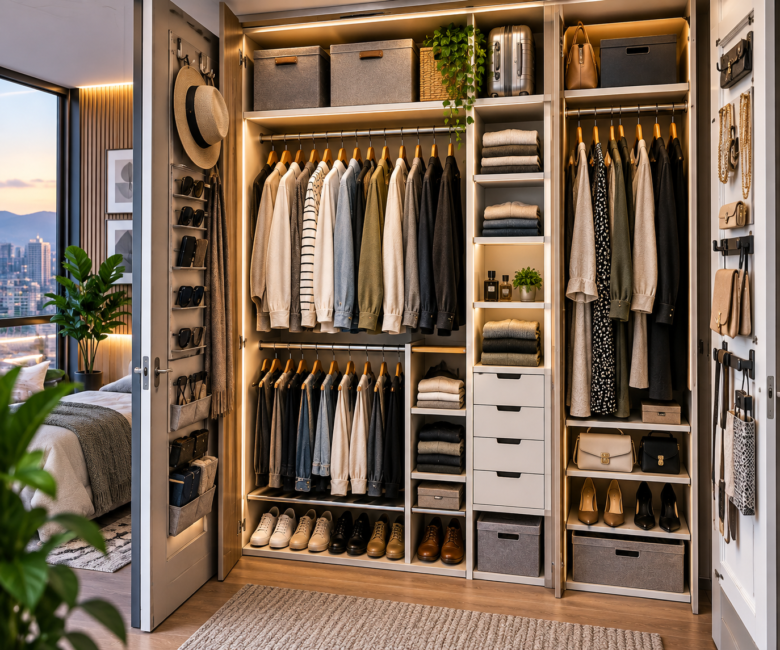
Your Small Closet Has More Space Than You Think
Learning how to maximize closet storage can completely change the way a small apartment feels. A closet may look full simply because the available space is being used horizontally while large areas above, below, behind, and even inside the doors remain almost empty.
Before buying additional organizers or storage furniture, empty the closet and look at it as an open space. Pay attention to the full height of the walls, the area underneath hanging clothes, the upper shelf, the corners, and the back of the doors. These overlooked areas can provide a surprising amount of additional storage.
The first goal is to divide the closet into functional zones. Everyday clothing should remain at an easy-to-reach height, while seasonal clothes, extra bedding, suitcases, and rarely used items can occupy the highest areas.
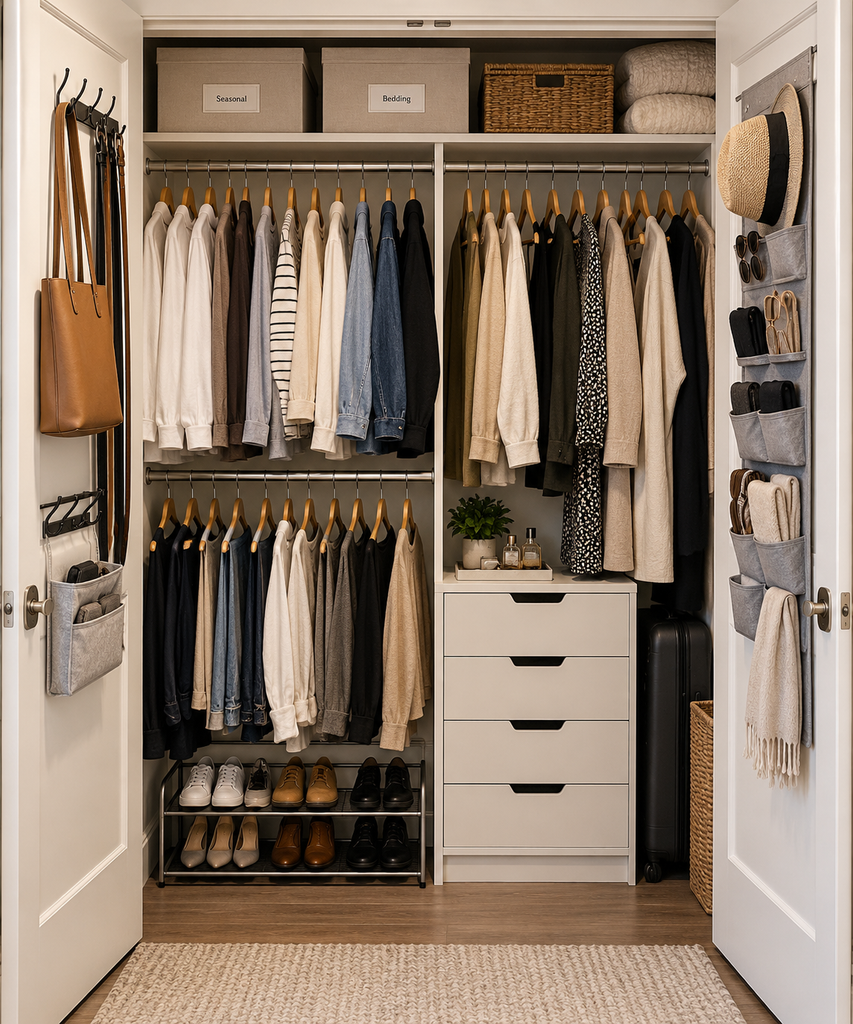
If your closet has only one hanging rod, a large portion of its vertical space may be wasted. Adding a second rod below the first can create two levels for shirts, jackets, folded trousers, and shorter garments. Long dresses and coats can remain together in a smaller dedicated section.
The floor should also have a clear purpose. Instead of allowing shoes, bags, and boxes to accumulate randomly, use narrow shoe racks, stackable containers, or low drawers that fit underneath hanging clothes.
At the top of the closet, matching storage boxes can hold seasonal clothing, blankets, or items you only need occasionally. Labeling these containers makes it easier to find what you need without pulling everything down.
A small closet does not necessarily need to become larger. It needs to become smarter. When every level has a specific function, the same closet can often hold significantly more while looking cleaner and becoming much easier to use every day.
Use the Full Height of Your Closet
One of the biggest mistakes in a small apartment is using only the space that is easy to reach. Many closets have a large empty area between the top shelf and the ceiling, and that space can become valuable storage.
Install an additional upper shelf when possible. Use this area for lightweight items that you do not need every day, such as seasonal clothes, travel bags, extra pillows, blankets, or winter accessories. Clear or labeled boxes are especially useful because they allow you to identify what is stored without opening every container.
For very high closets, keep a small folding step stool nearby rather than leaving the upper area unused. The items stored at the highest level should always be things you access occasionally.
Create Two Levels of Hanging Space
A single clothing rod can waste almost half of a closet’s vertical capacity.
Divide your clothes by length. Keep dresses, long coats, and other long garments together on one side. In the remaining area, install a second hanging rod underneath shirts, blouses, jackets, and other shorter clothing.
This simple change can nearly double the amount of hanging space available without increasing the size of the closet.
Slim hangers can also make a noticeable difference. Thick hangers consume valuable horizontal space, while thinner matching hangers allow clothing to sit closer together and give the closet a cleaner appearance.
Turn the Closet Floor Into Organized Storage
The bottom of a closet often becomes a collection of shoes, bags, boxes, and miscellaneous objects. Instead, treat the floor as another storage level.
A low shoe rack can create two or three organized rows where there was previously only one. Stackable shoe boxes are another option, especially when you want to protect footwear while keeping it visible.
If there is enough space underneath shorter hanging clothes, consider adding a compact drawer unit. Socks, underwear, accessories, workout clothes, or folded T-shirts can be stored here without requiring another dresser somewhere else in the apartment.
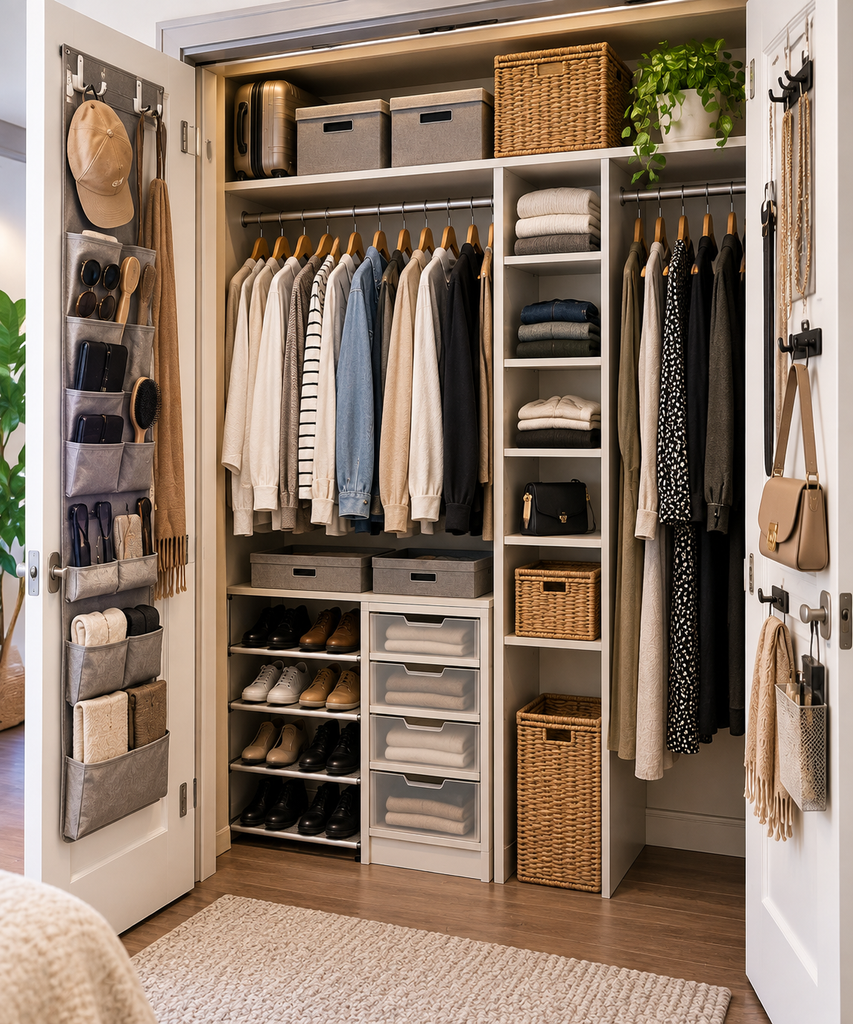
Even narrow gaps beside a drawer unit can be useful. A vertical basket can hold umbrellas, yoga mats, rolled bags, or other long items that are difficult to organize elsewhere.
The objective is to eliminate dead space. From the closet floor all the way to the ceiling, every area should either provide useful storage or make frequently used items easier to access.
Use Closet Doors as Extra Storage
Closet doors are often ignored, but in a small apartment they can provide valuable additional storage without taking away any floor space.
If your closet has traditional hinged doors, consider installing slim over-the-door organizers, hooks, or narrow hanging pockets. These areas are ideal for belts, scarves, handbags, jewelry, hats, small accessories, or even frequently used shoes.
Keep door storage relatively shallow. Large organizers can interfere with the clothes inside the closet and make the doors difficult to close. The best solutions add storage while remaining almost invisible when the closet is closed.
Sliding closet doors require a different approach because organizers cannot usually hang behind them. In this case, use the interior side walls of the closet for hooks, narrow shelves, or vertical accessory organizers.
Make Better Use of Deep Corners
Deep closets often appear spacious but can actually be difficult to organize. Items placed at the back disappear behind other belongings and eventually become forgotten.
Instead of stacking loose clothing or boxes in deep areas, use pull-out baskets or containers that can be removed completely. This allows you to reach everything stored at the back without emptying half of the closet.
Corners can also accommodate narrow vertical shelves for folded clothes, handbags, or storage baskets. If the closet is wide enough, an L-shaped shelving arrangement can transform an awkward corner into useful storage.
Organize Clothes by How Often You Use Them
Not everything deserves the easiest-to-reach position.
Keep everyday clothing between approximately waist and eye level. Items used several times a week should be visible and accessible without moving other things.
Occasional items can go higher or lower, while seasonal clothing can occupy the least accessible areas.
This creates a simple storage hierarchy:
Daily items → easiest areas to reach
Occasional items → upper or lower storage
Seasonal items → highest and deepest areas
This approach helps maximize closet storage while preventing the closet from becoming frustrating to use.
Think Beyond Clothing
In a small apartment, a closet may need to store much more than clothes.
Extra bedding, towels, suitcases, backpacks, documents, accessories, and occasionally household supplies may all need a place. Instead of mixing everything together, divide these items into clearly defined zones.
Use containers of similar dimensions whenever possible because they stack more efficiently than boxes of different shapes and sizes.
The result should not simply be a closet that holds more things. The real goal is to create a storage system where you can quickly see, reach, and return everything to its proper place.
Build a Closet System That Stays Organized
The best closet organization system is not the one that fits the largest number of items. It is the one that remains practical after weeks and months of everyday use.
Avoid filling every shelf and container completely. Leaving a little free space makes it easier to remove and return clothing without disturbing everything around it. An overfilled closet can quickly become disorganized again.
Group similar items together. Keep jeans with jeans, shirts with shirts, bags in one designated area, and accessories inside smaller containers. Shelf dividers can prevent stacks of folded clothes from collapsing into each other.
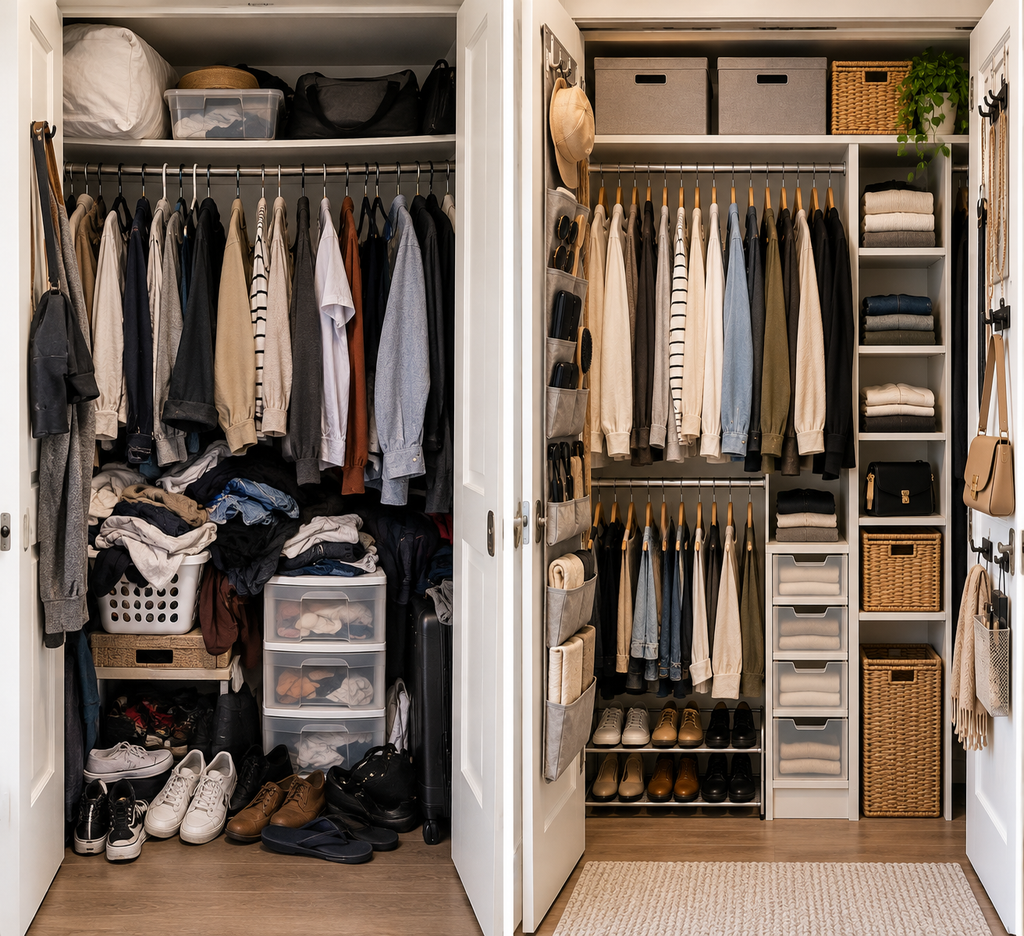
Use Adjustable Storage Whenever Possible
Your storage needs can change throughout the year. Adjustable shelves, movable hanging rods, stackable drawers, and modular organizers allow the closet to adapt without requiring a complete redesign.
During warmer months, heavier clothing can move to upper storage while lighter everyday clothes remain accessible. When seasons change, the system can easily be reversed.
This flexibility is especially useful when you need to maximize closet storage in a small apartment because the same space may need to serve several different purposes throughout the year.
A Small Closet Can Hold More Without Feeling Crowded
A limited closet does not automatically mean limited storage.
The difference comes from using the entire space intelligently—from the floor to the ceiling and from the front doors to the deepest corners.
Double hanging rods can increase clothing capacity, upper shelves can store seasonal belongings, drawers can transform unused floor space, and doors or side walls can organize smaller accessories.
Most importantly, avoid adding organizers simply because there is room for them. Every shelf, basket, hook, and container should solve a specific storage problem.
When you maximize closet storage with a clear system, a small apartment becomes easier to maintain and everyday items become easier to find.
Instead of trying to fit more furniture into your home, you can make the storage you already have work much harder.