Small Changes Can Make Everyday Life Easier
Simple everyday home habits can make your space more organized, comfortable, and efficient without requiring expensive renovations, new furniture, or complicated technology.
Many homes gradually become filled with objects that are rarely used. Drawers become crowded, closets become difficult to organize, and simple tasks can take longer because everyday items are not where we expect them to be. At the same time, small unnecessary expenses—such as wasted electricity, forgotten food, duplicate purchases, or inefficient routines—can slowly increase monthly costs.
The good news is that improving these areas does not have to happen overnight. Creating a better home can begin with a few practical habits that are easy to maintain. Instead of trying to completely reorganize an entire house in one weekend, it is often more effective to improve one small routine at a time.
The following everyday habits are designed to help create a home that feels more organized, spacious, economical, and enjoyable. Most of them require little or no money, and they can work in apartments, small houses, family homes, or even shared living spaces.
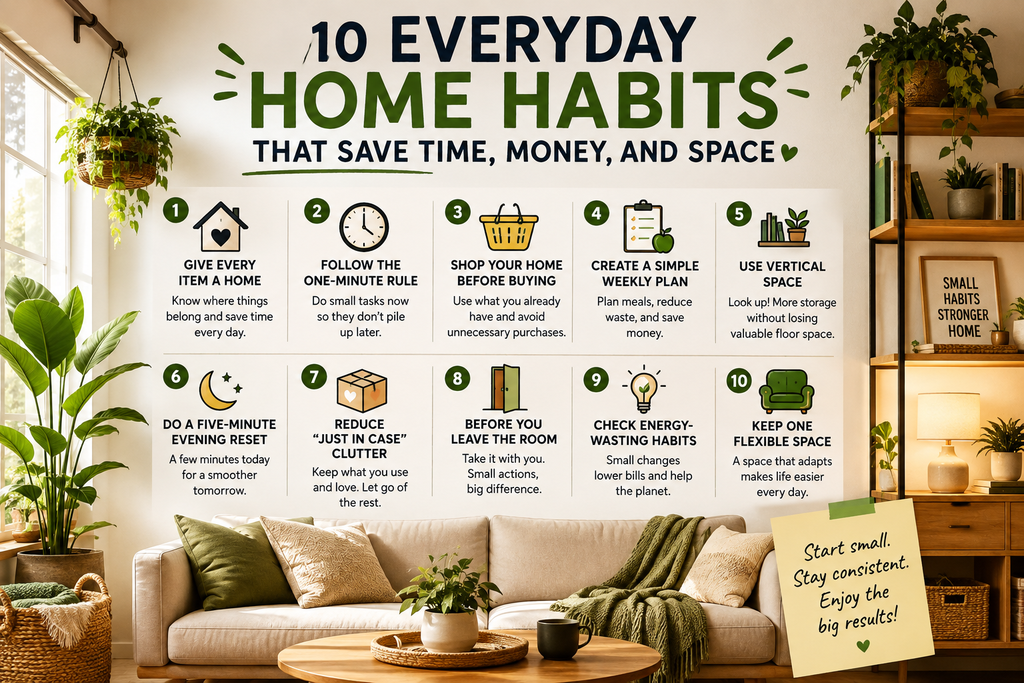
- Give Every Frequently Used Item a Permanent Home
One of the simplest ways to save time is to decide exactly where frequently used objects belong. Keys, chargers, bags, remote controls, documents, cleaning supplies, and everyday kitchen tools are much easier to manage when they always return to the same location.
A small tray near the entrance can hold keys and other pocket items. Chargers can stay together in one designated drawer or basket, while important household documents can be stored in a clearly labeled folder. These solutions may seem minor, but they reduce the minutes spent searching for things throughout the week.
The goal is not to create a perfectly organized home. It is to make frequently repeated actions easier. When an object has a logical place close to where it is normally used, putting it away becomes almost automatic.
- Follow the One-Minute Rule
Small household tasks often become frustrating because they accumulate. A cup left on a table, shoes in the hallway, unopened mail, or a jacket placed on a chair may not seem important individually. When several of these small tasks pile up, however, a room can quickly begin to feel cluttered.
A useful habit is simple: if something can realistically be completed in about one minute, consider doing it immediately. Put the cup in the dishwasher, hang up the jacket, return the remote control, or place the shoes where they belong.
This approach prevents dozens of tiny chores from turning into a larger cleaning session later. It can also make the home feel calmer without requiring hours of organization every day.
- Shop Your Home Before Buying Something New
Before purchasing another storage container, decoration, kitchen accessory, or piece of furniture, take a quick look around the house. Sometimes the solution you need is already there.
An unused basket may become bathroom storage. A small table from one room may work better beside a bed. Glass jars can organize small items, while an empty drawer can sometimes replace an additional organizer.
This habit can reduce unnecessary spending while also preventing the home from becoming overcrowded. It encourages creativity and makes better use of items that have already been purchased.
- Create a Simple Weekly Food Plan
Food waste is one of those household expenses that can easily go unnoticed. Vegetables forgotten in the refrigerator, duplicate ingredients, and last-minute purchases can slowly increase the amount of money spent on food.
A simple weekly plan can help. Before shopping, check the refrigerator, freezer, and pantry and identify what should be used first. Then plan a few meals around those ingredients rather than starting every meal idea from scratch.
The plan does not need to cover every breakfast, lunch, and dinner. Even deciding on four or five main meals for the week can make grocery shopping more focused and reduce unnecessary purchases.
Keeping a small “use first” area in the refrigerator can also help. Place foods that are approaching their best-before date in this visible section so they are easier to remember when preparing the next meal.
- Everyday Home Habits: Use Vertical Space Before Adding More Furniture
When storage becomes limited, the first reaction is often to buy another cabinet, table, or storage unit. In a small home, however, additional furniture can take away valuable floor space and make rooms feel even smaller.
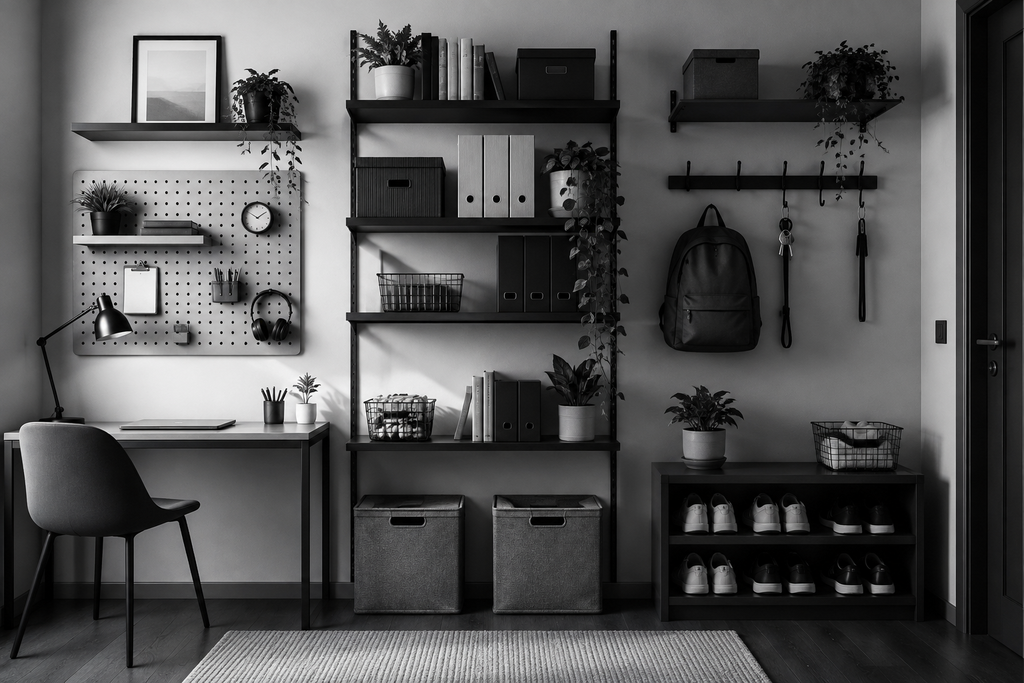
Before adding furniture, look upward. Empty wall areas above desks, toilets, counters, and other furniture may provide useful storage opportunities. Wall-mounted shelves, hooks, pegboards, and tall narrow storage units can make use of areas that would otherwise remain empty.
The important part is to avoid covering every wall. A few carefully selected vertical storage areas can provide functionality while preserving enough open space for the room to feel comfortable.
- Create a Five-Minute Evening Reset
Instead of leaving all household organization for the weekend, dedicate approximately five minutes at the end of the day to resetting the areas you use most.
Return cushions to the sofa, clear the kitchen counter, put away objects left in the living room, prepare anything needed for the following morning, and quickly check whether something is out of place.
Five minutes will not make an entire home perfectly organized, and that is not the objective. The purpose is to prevent small amounts of disorder from accumulating day after day. Waking up to a reasonably organized kitchen or living area can also make the beginning of the next day feel easier.
- Reduce “Just in Case” Clutter
Many homes slowly become crowded with objects kept because they might be useful someday. Extra containers, old cables, clothes that are rarely worn, duplicate kitchen tools, and unused decorations can occupy valuable storage space for years.
Instead of trying to declutter the entire home at once, choose one small area each week. It could be a single drawer, one shelf, or a small section of a closet. Ask whether each object is regularly used, genuinely useful, or important enough to justify the space it occupies.
Items in good condition do not necessarily need to be thrown away. They can be donated, sold, given to someone who needs them, or moved to a more appropriate location.
This gradual approach makes decluttering easier to maintain and can create noticeable extra space without requiring a major home makeover.
- Use a “Before You Leave the Room” Habit
Walking from one room to another happens dozens of times throughout the day. Those small trips can become an easy opportunity to keep the home organized.
Before leaving a room, take a quick look around and see whether something belongs in the direction you are already going. A glass can return to the kitchen, a book can go back to its shelf, or a piece of clothing can be carried toward the bedroom.
The idea is not to turn every movement through the house into a chore. It is simply to combine small organizational tasks with movements you were already going to make.
Over time, this habit can reduce clutter without requiring a separate cleaning session.
- Check Energy-Wasting Habits Once a Week
Saving money at home is not always about making dramatic changes. Small amounts of unnecessary energy use can add up over time.
Once a week, take a quick look at the habits that may be increasing household consumption. Check whether lights are regularly left on in empty rooms, chargers remain connected unnecessarily, or heating and cooling systems are working harder than needed because doors or windows are open.
Natural light can also be used more effectively during the day. Opening curtains instead of immediately turning on several lights is a simple habit that costs nothing.
The objective is not to constantly worry about every appliance. Instead, become aware of repeated patterns and correct the ones that are easy to change. Small improvements practiced consistently can be more realistic than attempting a complete lifestyle transformation.
- Keep One Flexible Space in Your Home
Not every corner of a home needs a permanent purpose. Keeping one small area flexible can make everyday living much easier, especially when space is limited.
A compact table might function as a workspace during the morning, a homework area in the afternoon, and additional dining space in the evening. A lightweight chair can move between rooms when needed, while a storage ottoman can provide seating and hide everyday items at the same time.
Furniture that performs more than one function can be particularly useful in apartments and smaller homes. The key is choosing pieces based on how they will actually be used rather than simply filling an empty area.
Leaving some visual breathing room is equally important. An empty corner or clear surface is not wasted space. Sometimes having fewer objects makes a room easier to use, easier to clean, and more relaxing to live in.
Everyday Home Habits for a Better, Simpler Home
Creating a more efficient home does not require perfection. It is the result of many small decisions repeated consistently.
Giving everyday objects a permanent location can save time. Planning meals can reduce unnecessary spending and food waste. Using vertical storage can preserve valuable floor space, while short daily resets can prevent clutter from becoming overwhelming.
Most importantly, these habits can be adapted to different lifestyles. A routine that works perfectly for one household may not work for another. Experiment with the ideas that solve real problems in your own home and ignore the ones that do not provide meaningful benefits.
Start with just one habit and practice it for a week. Once it begins to feel natural, introduce another. Over time, these small improvements can create a home that requires less effort to maintain while providing more space, organization, and freedom to enjoy everyday life.
A better home is not necessarily the one with more things—it is the one that makes everyday living feel simpler. These everyday home habits are easy to adapt to your own routine. Start with the changes that solve your biggest daily challenges, whether that means reducing clutter, saving money, improving organization, or making better use of limited space.