Introduction: Making Every Inch of a Small Kitchen Count
Storage ideas for small kitchens can transform even the most compact kitchen into a practical, organized, and comfortable space. A small kitchen does not have to feel crowded, disorganized, or difficult to use. With the right storage strategy, even the most compact cooking space can become practical, comfortable, and visually appealing. The secret is not necessarily having more cabinets or a larger floor plan, but learning how to use every available inch intelligently.
In small kitchens, valuable storage opportunities are often hiding in plain sight. Empty walls, unused corners, the space above cabinets, cabinet doors, narrow gaps between appliances, and even the area beneath the sink can all become functional storage zones. By thinking vertically and choosing solutions that serve more than one purpose, homeowners can create additional room without making the kitchen feel overloaded.
- Use Vertical Space Instead of Filling the Floor
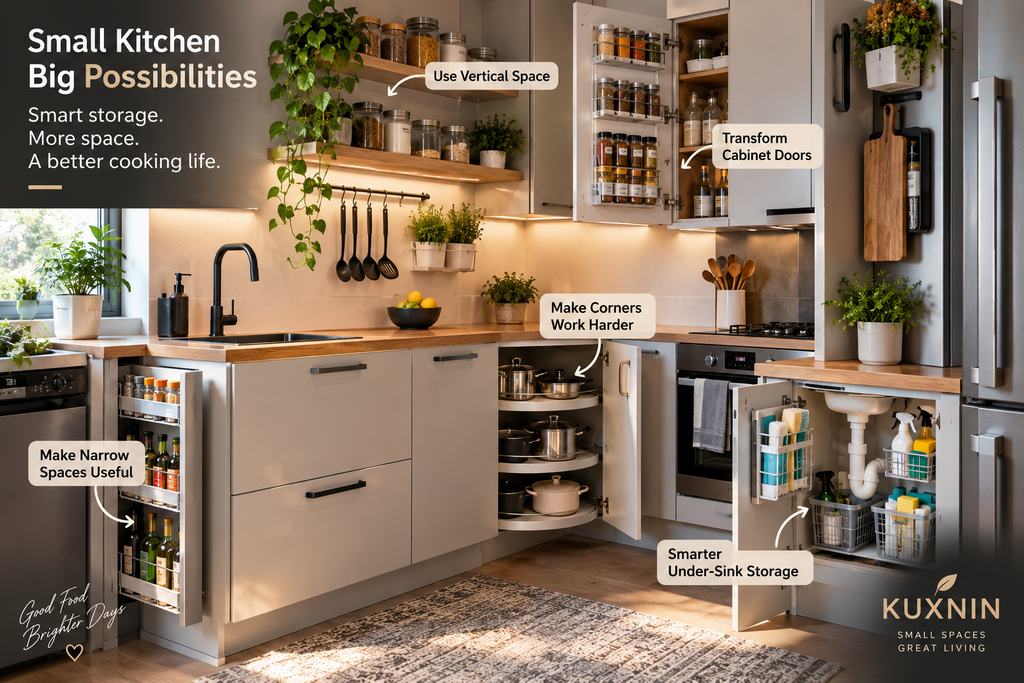
When floor space is limited, the walls become one of the most valuable resources in the kitchen. Tall shelving units, floating shelves, wall-mounted organizers, and ceiling-height cabinets can dramatically increase storage capacity while keeping countertops clear.
Open shelves can be particularly useful for everyday items such as plates, bowls, glasses, spices, and frequently used ingredients. Instead of hiding everything behind cabinet doors, carefully arranged shelves can combine storage and decoration. Using matching containers or simple baskets can help maintain a clean and organized appearance.
Another effective strategy is extending cabinets toward the ceiling. The highest shelves can hold items that are not needed every day, such as large serving dishes, seasonal kitchen accessories, or extra containers. A small folding step stool can make these areas accessible when necessary.
- Transform Cabinet Doors Into Storage Areas
The inside of cabinet doors is often completely unused, yet it can provide valuable additional storage. Slim racks can hold spices, cleaning products, cutting boards, measuring spoons, or small kitchen accessories without occupying the main cabinet space.
Under the sink, door-mounted organizers are especially practical for sponges, brushes, gloves, and cleaning supplies. Keeping these smaller items on the doors leaves the main compartment available for larger bottles and containers.
The same idea can work on pantry doors. Narrow shelves installed on the inside can create an additional mini-pantry for spices, sauces, packets, and other lightweight products.
- Make Difficult Corners Work Harder
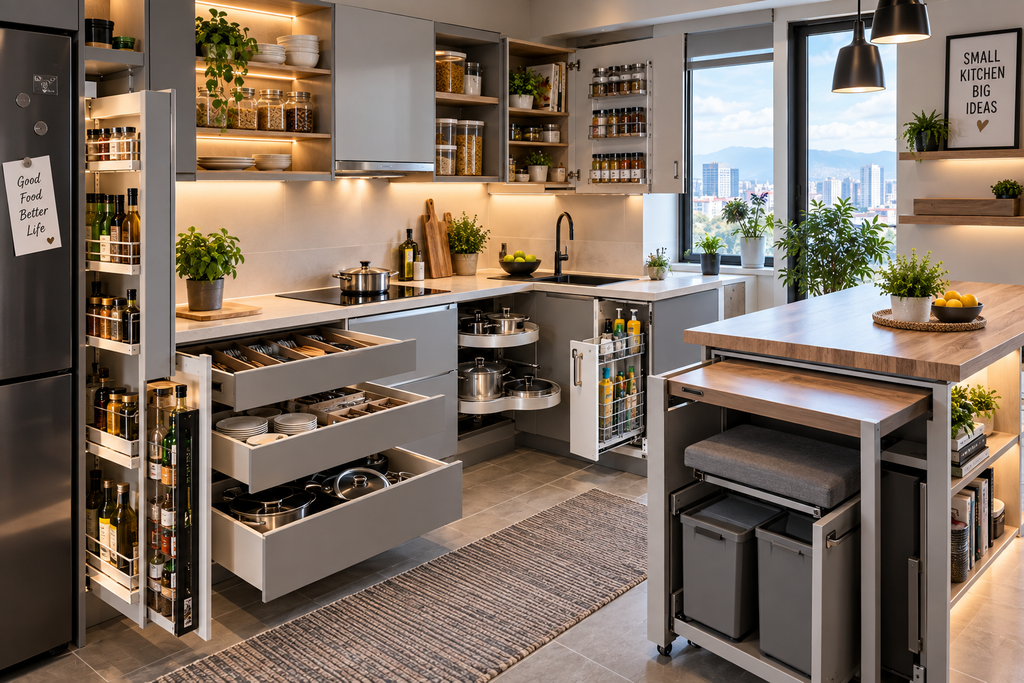
Kitchen corners can easily become wasted space, particularly inside deep cabinets where items disappear into the back. Instead of accepting these areas as inconvenient, rotating organizers, pull-out shelves, and corner drawers can make them much more functional.
A rotating organizer allows ingredients, jars, or cookware to be reached without removing everything in front. Pull-out systems provide a similar advantage by bringing the contents of deep cabinets toward you.
Even an empty exterior corner can become useful. A narrow corner shelf can provide space for cookbooks, plants, coffee supplies, or decorative containers while requiring very little floor area.
- Create Smarter Storage Under the Sink
The cabinet beneath the kitchen sink often becomes one of the most disorganized areas because pipes reduce the usable space. However, adjustable shelves and stackable organizers can help work around the plumbing and create separate levels of storage.
Cleaning products can be grouped inside removable baskets so they are easy to access and carry. A tension rod can also provide a place to hang spray bottles, leaving the bottom of the cabinet available for larger supplies.
Keeping this area divided into clearly defined zones prevents products from accumulating randomly and makes it easier to see what you already have before purchasing more.
- Take Advantage of Narrow Spaces
Small kitchens often contain narrow gaps between the refrigerator, cabinets, or walls that appear too small to be useful. However, these spaces can become surprisingly effective storage areas. A slim rolling pantry can fit into a narrow opening and provide several levels of storage for spices, canned foods, bottles, oils, and other everyday ingredients.
Because these units slide completely out, everything remains visible and accessible. This prevents products from becoming forgotten at the back of deep cabinets and makes it easier to keep track of what is available.
Even a very narrow wall can support hooks, magnetic strips, or compact shelving. The goal is to look at every unused space as a potential storage opportunity rather than simply accepting it as wasted room.
- Organize Drawers to Increase Their Capacity
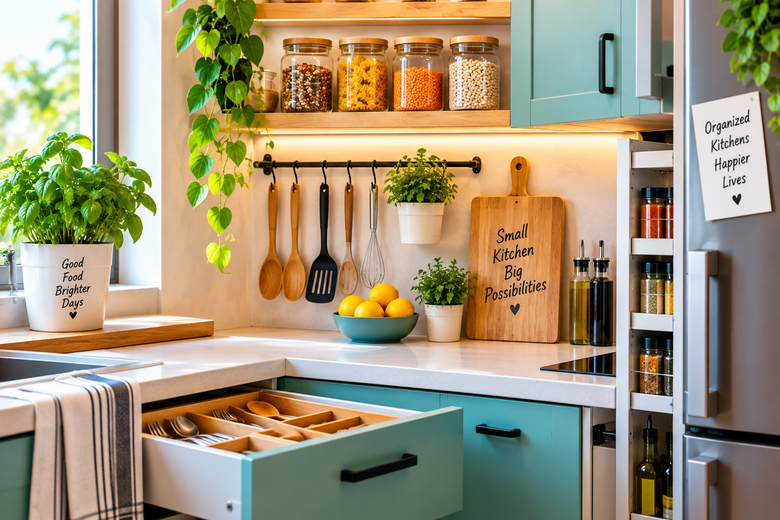
Drawers can hold much more when their interiors are properly divided. Adjustable organizers help separate utensils, cooking tools, knives, and smaller accessories so that everything has a dedicated place.
Deep drawers are especially valuable in compact kitchens. Instead of using them only for utensils, they can store plates, bowls, food containers, or even pots and pans. Vertical dividers can also keep lids, cutting boards, and baking trays upright, making them easier to remove without disturbing everything else.
Another useful technique is to periodically remove duplicate or rarely used utensils. In a small kitchen, every drawer should contain items that genuinely contribute to daily cooking.
- Store Pots and Pans More Efficiently
Pots, pans, and their lids can consume an enormous amount of cabinet space when they are stacked without a system. Using vertical racks allows pans and lids to stand individually, making each piece easier to reach.
Hanging systems can also work beautifully in kitchens where cabinet space is limited. A wall-mounted rail can hold frequently used pans and cooking utensils while adding character to the room. When arranged carefully, practical kitchen equipment can become part of the decoration.
For cabinets, pull-out organizers are another excellent solution. Instead of reaching into a dark cabinet and removing several pans to find the one you need, the entire organizer can slide toward you.
- Turn the Space Above Cabinets Into Useful Storage
If kitchen cabinets do not extend all the way to the ceiling, the empty area above them can provide valuable additional storage. Decorative baskets or attractive containers can hold items that are used less frequently while keeping visual clutter under control.
This area is ideal for seasonal serving pieces, extra kitchen linens, specialty appliances, or supplies purchased in bulk. Using similar containers creates a more intentional appearance and prevents the upper part of the kitchen from looking disorganized.
The key is to avoid filling every available centimeter. Smart storage should make a small kitchen feel more spacious—not more crowded.
- Use the Refrigerator Area More Efficiently
The refrigerator occupies a significant amount of space in most kitchens, but the areas around it are often underused. If there is space above the refrigerator, a cabinet or decorative storage baskets can provide room for items that are not needed every day, such as serving trays, extra containers, or small appliances.
The side of the refrigerator can also become a practical organization zone. Magnetic racks can hold spices, paper towels, lightweight utensils, shopping lists, or other frequently used items without taking up countertop space.
However, avoid covering every available surface. In a compact kitchen, maintaining some visual breathing room is just as important as creating additional storage.
- Build a Compact and Organized Pantry
A large walk-in pantry is not necessary to keep food organized. Even one narrow cabinet can function as an efficient pantry when its interior is carefully planned.
Clear containers make dry foods such as rice, pasta, cereal, flour, and grains easier to identify while creating a cleaner appearance. Stackable containers can take advantage of vertical space, while small baskets can group similar products such as snacks, baking ingredients, sauces, or breakfast foods.
Place frequently used ingredients between eye and waist level and reserve higher shelves for products that are used less often. This simple arrangement makes everyday cooking faster and reduces the chance of purchasing ingredients you already have.
- Choose Furniture That Provides Extra Storage
In a small kitchen, furniture should ideally perform more than one function. A compact kitchen island, for example, can provide additional preparation space while incorporating drawers, shelves, or cabinets underneath.
A narrow rolling cart can be equally useful. It can serve as an additional work surface while cooking and then be moved against a wall when it is no longer needed. Some carts also provide space for bottles, cookware, vegetables, or small appliances.
Built-in benches can offer another clever solution. Seating with hidden compartments underneath can store kitchen linens, rarely used appliances, or larger items without requiring an additional cabinet.
- Keep Countertops as Clear as Possible
One of the fastest ways to make a small kitchen feel larger is to reduce the number of objects sitting on the countertops. When every appliance, container, and utensil remains visible, even a well-designed kitchen can appear crowded.
Keep only the appliances you use frequently on the counter. Items used occasionally can be stored inside cabinets, on upper shelves, or in a dedicated appliance zone.
Wall-mounted rails can hold utensils, magnetic strips can organize appropriate kitchen tools, and floating shelves can move frequently used items away from valuable preparation surfaces. The result is more room for cooking and a cleaner visual environment.
- Create Storage Zones Based on Daily Activities
An efficient small kitchen should be organized according to how it is actually used. Instead of placing items wherever space happens to be available, create specific zones for different activities.
For example, keep coffee, mugs, sweeteners, and related supplies together to create a compact coffee station. Store pots, pans, and cooking utensils near the stove. Keep cutting boards and knives close to the main food preparation area, and place dishes near the dishwasher or sink when possible.
This approach reduces unnecessary movement and makes a small kitchen easier and faster to use. Good organization is not simply about fitting more things into a limited space—it is about making the entire room work more intelligently.
- Turn Unused Corners Into Smart Storage Areas
Small kitchens often have corners and narrow spaces that are completely overlooked. However, these areas can become surprisingly useful when they are equipped with corner drawers, rotating shelves, pull-out cabinets, or custom vertical storage. Instead of allowing valuable space to remain empty, every corner can contribute to keeping the kitchen organized and functional.
A rotating corner organizer, for example, can make pots, pans, bowls, and pantry items much easier to reach. Narrow pull-out cabinets installed beside a refrigerator or between existing cabinets can provide convenient storage for spices, cooking oils, bottles, and other everyday essentials.
- Use the Space Above Kitchen Cabinets
The area between the upper cabinets and the ceiling is another valuable storage opportunity. Decorative baskets, attractive containers, or closed cabinets can be used to store items that are not needed every day. This keeps countertops clear while taking advantage of vertical space that would otherwise remain unused.
For a cleaner appearance, choose containers with similar shapes and finishes. A visually organized kitchen usually feels larger than one filled with mismatched objects, even when both kitchens have exactly the same dimensions.
- Create Storage Inside Cabinet Doors
Cabinet doors can provide additional storage without requiring extra floor space. Slim organizers mounted inside the doors can hold cutting boards, measuring spoons, cleaning supplies, lids, or small kitchen accessories.
This simple strategy demonstrates an important principle of small kitchen storage ideas: the best solutions do not always require adding more furniture. Sometimes, improving the way existing cabinets are used can create significant additional storage.
- Keep Countertops as Clear as Possible
Finally, avoid using countertops as permanent storage areas. When appliances, containers, utensils, and food packages cover every available surface, even a well-designed small kitchen can feel crowded.
Keep only frequently used items visible and give everything else a designated storage location. Clear countertops provide more preparation space, make cleaning easier, and create the impression of a larger, calmer, and more carefully designed kitchen.
Conclusion: A Small Kitchen Can Offer Big Storage Possibilities
A small kitchen does not need to limit the way you cook, organize, or enjoy your home. The most effective small kitchen storage ideas focus on using existing space more intelligently rather than simply adding more furniture.
Vertical walls, cabinet doors, narrow gaps, corners, deep drawers, under-sink areas, and spaces above cabinets can all become valuable storage zones. When these areas work together, even a compact kitchen can provide surprising amounts of usable space.
The goal is also not to fill every empty corner. A successful small kitchen should maintain a balance between storage and visual simplicity. Keeping countertops clear, grouping items according to daily activities, and choosing multifunctional solutions can make the room feel calmer, larger, and easier to use.
Start with the areas that create the most frustration in your kitchen. One improved drawer, one organized cabinet, or one previously unused wall can make a noticeable difference. Over time, these small improvements can transform a crowded kitchen into an efficient space where everything has a purpose and a place.
With thoughtful planning, limited space stops being a problem and becomes an opportunity for smarter design.