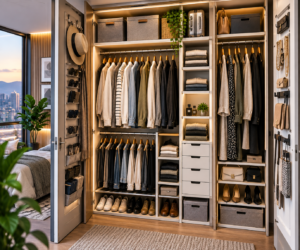
Small Bedroom Storage: Make Every Inch Work for You
Living in a small bedroom does not mean giving up comfort, organization, or style. In fact, limited space can encourage smarter design decisions that transform areas we normally ignore into valuable storage. The key is to stop thinking only about the floor and begin using the entire room, from the space underneath the bed to the walls and even the area close to the ceiling.
Small bedroom storage becomes much easier when furniture serves more than one purpose. A bed, for example, does not have to be simply a place to sleep. With the right design, it can provide drawers for clothing, compartments for blankets, shelves for everyday objects, or even a large hidden storage area underneath the mattress.
Vertical space is equally important. Many small bedrooms have unused areas above wardrobes, doors, desks, and beds. Installing cabinets or shelves in these locations can create additional storage without reducing the space available for walking. Items that are not used every day, such as extra blankets, seasonal clothing, suitcases, pillows, and bedding, can be stored higher up while frequently used belongings remain within easy reach.
The objective is not to fill every wall with furniture. A successful small bedroom should still feel open and comfortable. Instead, the goal is to identify areas that normally go unused and transform them into practical storage while maintaining a clean and visually balanced environment.
- Raise the Bed and Create Storage Underneath
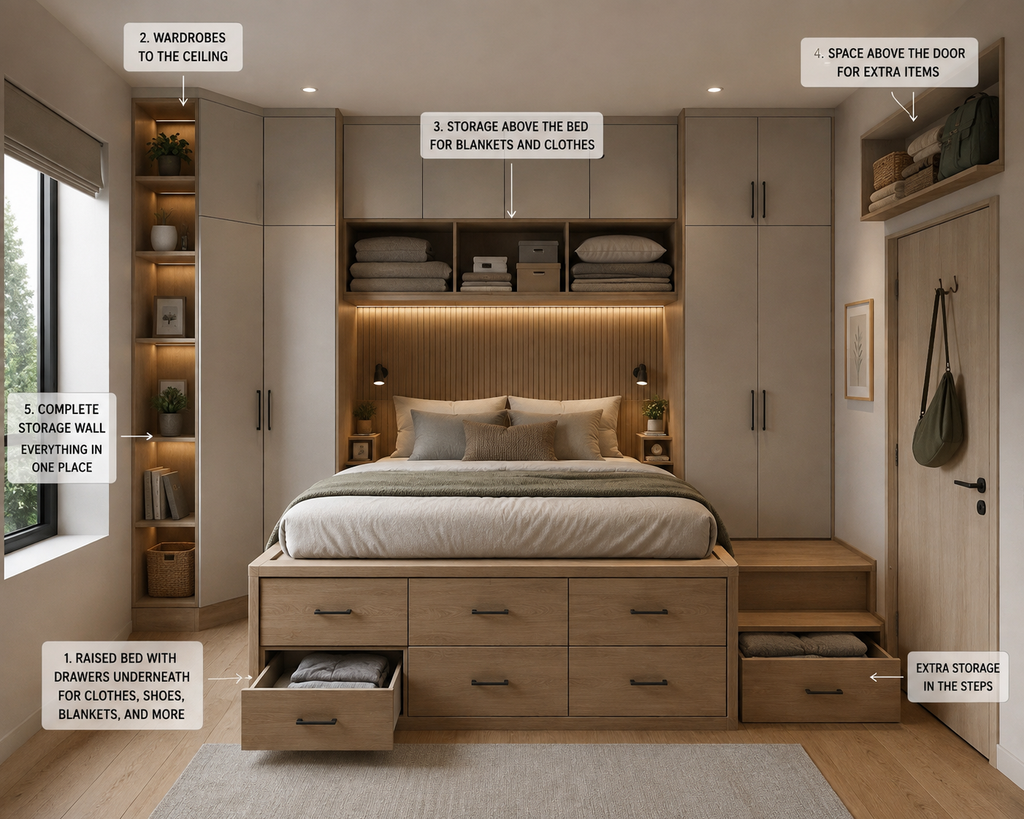
One of the largest pieces of furniture in almost every bedroom is the bed, which means the area underneath it represents an enormous storage opportunity. Instead of allowing this valuable space to remain empty, a raised bed can create enough room to organize clothing, shoes, blankets, bedding, and other household items.
A platform bed with built-in drawers is one of the simplest solutions. Deep drawers can hold folded clothes, towels, sheets, and blankets while keeping everything protected and easy to access. Another option is a lifting bed, where the mattress platform rises to reveal a large storage compartment underneath. This type of design is especially useful for bulky items such as comforters, winter blankets, pillows, and suitcases.
In extremely small rooms, the bed can be raised even higher. A loft-style bed creates an entirely new functional area underneath that can become a wardrobe, desk, reading corner, or combination of storage cabinets and drawers. By moving the sleeping area upward, the same section of floor effectively performs two different functions.
- Build Wardrobes All the Way to the Ceiling
In a small bedroom, a traditional wardrobe often leaves a large unused gap between the top of the cabinet and the ceiling. Extending storage all the way upward can turn this forgotten area into valuable space without taking up a single additional centimeter of floor.
The lower and middle sections should contain the things you use frequently, such as everyday clothing, underwear, shoes, and accessories. Higher cabinets can be reserved for items that are needed less often, including extra blankets, comforters, seasonal clothing, luggage, pillows, and bedding.
Closed cabinets are particularly useful in a small bedroom because they hide visual clutter. When clothing and household items are stored behind simple doors, the room can feel calmer and larger even when a significant amount of storage is available.
If possible, choose wardrobe doors in light colors that coordinate with the walls. Using similar tones can make a tall storage unit visually blend into the room instead of appearing like a massive piece of furniture.
- Turn the Space Above the Bed Into Useful Storage
The wall above the bed is another area that is frequently underused. Instead of filling it only with artwork, carefully designed overhead cabinets can provide storage for blankets, sheets, towels, seasonal clothing, or other lightweight items.
A practical design can combine cabinets near the ceiling with smaller shelves or niches closer to the bed. This creates storage while still leaving enough open wall space so the sleeping area does not feel enclosed.
However, overhead storage must be installed securely. Cabinets positioned above a bed should be properly anchored and designed for the weight they will carry. Frequently used or heavy objects are generally better stored at lower levels.
For a cleaner appearance, overhead cabinets can use the same finish as the wardrobe. This creates the impression of one integrated storage system rather than several unrelated pieces of furniture.
- Use the Forgotten Space Above Doors
Even the area above a bedroom door can become useful small bedroom storage. A shallow cabinet or sturdy shelf installed above the doorway can hold items that are only needed occasionally.
This location is particularly practical for folded blankets, empty bags, seasonal decorations, spare pillows, or storage boxes containing clothing that is currently out of season.
Using matching boxes or baskets can make open shelving look more organized. Labeling containers can also save time because you will know exactly where everything is stored without having to open several boxes.
The important principle is simple: items used every day should remain easy to reach, while items used only occasionally can occupy the highest areas of the room.
- Create a Storage Wall Instead of Using Several Pieces of Furniture
When space is limited, having a dresser on one wall, a wardrobe on another, several shelves, and additional storage boxes can make the bedroom feel crowded. In some rooms, creating one complete storage wall is a better solution.
A floor-to-ceiling system can combine hanging space for clothing, drawers, shelves, shoe storage, compartments for blankets, and upper cabinets for less frequently used belongings. Everything is concentrated in one organized area while the remaining walls stay relatively open.
The system can even incorporate a small desk, television niche, mirror, or bedside surface. This allows one wall to perform several functions and reduces the number of separate furniture pieces required.
- Store Blankets and Bedding Without Making the Room Feel Crowded
Blankets, comforters, sheets, and extra pillows can consume a surprising amount of space, especially in a small bedroom. Instead of keeping them in everyday drawers that could be used for clothing, create dedicated storage areas for bulky bedding.
The highest compartments of a wardrobe are ideal for these items because they are usually needed less frequently. Vacuum storage bags can also reduce the volume of seasonal blankets and comforters before placing them inside cabinets or storage boxes.
Another practical option is a storage bench positioned at the foot of the bed. It can provide a place to sit while also hiding blankets, sheets, or pillows inside. In an extremely small room, however, make sure the bench does not interfere with the walking path.
Under-bed drawers are particularly useful for bedding that is changed regularly. Dividing these drawers into sections can keep sheets, pillowcases, blankets, and towels organized instead of creating one large pile.
- Use High Shelves for Items You Do Not Need Every Day
High wall areas can provide valuable small bedroom storage without occupying useful floor space. Shelves installed closer to the ceiling can hold decorative boxes, luggage, seasonal clothing, extra bedding, or other items that are only occasionally needed.
The key is to avoid making these shelves look overloaded. Using a limited number of matching containers creates a cleaner appearance and prevents the room from feeling visually crowded.
Corners can also be useful. A narrow vertical shelving unit can transform an otherwise forgotten corner into storage for books, folded clothing, baskets, or personal belongings.
- Combine Open and Closed Storage
Not everything needs to be hidden, but not everything should remain visible either. A balanced combination of open shelves and closed cabinets can make a small bedroom both practical and attractive.
Closed cabinets are best for clothing, bedding, personal items, and anything that can create visual clutter. Open shelves can be reserved for a few books, plants, photographs, or decorative objects.
This approach prevents the room from looking like a storage room. Even when every centimeter is being used efficiently, some visual breathing space should remain.
- Think Vertically Before Adding More Furniture
Before purchasing another dresser, cabinet, or storage unit, look upward. There may already be enough unused vertical space to solve the storage problem without adding another piece of furniture to the floor.
The area above a wardrobe, around a doorway, over the headboard, or along an empty upper wall can often accommodate additional cabinets or shelves. This strategy keeps the center of the room open and makes movement easier.
A well-designed small bedroom does not necessarily have less storage than a large one. The difference is that storage must be planned more carefully and distributed across areas that would otherwise remain unused.
- Keep the Final Design Simple and Comfortable
The ultimate goal of small bedroom storage is not to fit as many objects as possible into one room. It is to create an organized environment where everything has a logical place while the bedroom remains comfortable and relaxing.
Start with the largest opportunities: the space underneath the bed, full-height wardrobes, and upper cabinets. Then use smaller solutions such as shelves, baskets, drawer organizers, hooks, and storage boxes to handle the remaining items.
When beds, walls, corners, doors, and high areas are used strategically, even a very small bedroom can provide impressive storage capacity. Clothing can remain organized, blankets and bedding can be kept out of sight, and valuable floor space can stay open.
The result is a bedroom that feels larger not because its dimensions have changed, but because every part of the room has been given a clear purpose.